
Hi folks! John here.
Legend has it that the famed playwright George Bernard Shaw once said that “we do not stop playing because we grow old, we grow old because we stop playing.” I think there’s a lot of truth in that. The best games keep us curious. They surprise us. They challenge us to think differently, take risks, and see familiar problems through a new lens.
That’s exactly how we approach designing classroom experiences at EMC² Learning.
So welcome to The Games People Play, the first installment of what we hope will become a semi-regular feature here on the EMC² Learning blog to shed a little bit of ongoing insight into the type of games that are making their way to our tabletops. In each installment Michael or I will share a few of the games we’ve been playing lately: not as reviews, but as design conversations. We’ll explore the mechanics, themes, and moments that caught our attention, then ask the question we’re always asking:
“What can classrooms steal from this?“
Sometimes those ideas become brand-new resources. Sometimes they inspire a small twist on an existing activity. And sometimes? They simply remind us that the best learning experiences (whether around a table or in a classroom) invite people to wonder, experiment, laugh, and play.
So let’s see what’s been hitting our table lately.
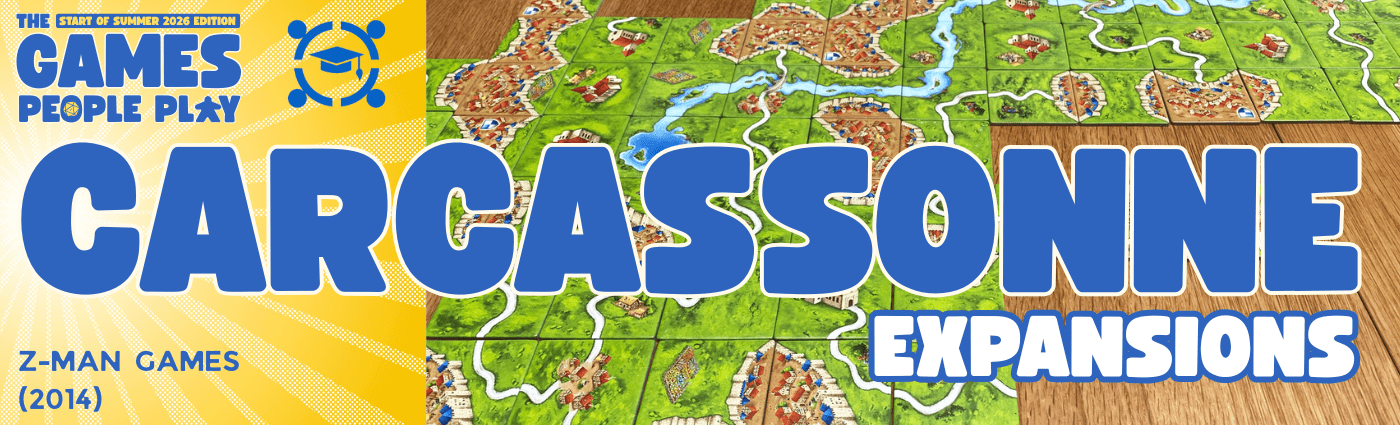
Carcassonne (and its many expansions): Building Our Own Legacy
The first game hitting our table this summer isn’t a new release at all. It’s Carcassonne—one of our all-time favorites—but with a Christmas twist.
My wife and I love Legacy games like Pandemic Legacy and Risk Legacy, where new rules and surprises are revealed over multiple play sessions. I started wondering if we could capture a little of that magic with a game we already loved… simply by tweaking a single rule (or two) here or there one play-through at a time.
So I bought a handful of Carcassonne expansions, wrapped each one in an identical mystery bag, and let my wife pick one at random. Whatever she chose, we committed to playing it ten times before opening the next bag.
It’s been fantastic!
Instead of dumping a dozen new mechanics into the game at once, each expansion gets its moment. One introduces a fire-breathing dragon that turns the game into a battle for survival. Another adds a clever push-your-luck system with sheep and wolves (do I cash in for points? Or keep adding to my flock while running the risk of getting everything wiped out!?). After ten plays, opening the next mystery bag feels like starting a brand-new season. All at once familiar and totally novel at the same time.
The whole experiment reminded me that fresh doesn’t have to mean completely different.
One new idea is often enough.
That’s true in classrooms, too. We don’t always need to reinvent an activity to keep students engaged. Sometimes introducing a single new wrinkle (a new role, a new variable, or a clever new constraint) is all it takes to make a familiar experience feel brand new.
Students still benefit from the repetition. They still build fluency. But each small twist gives them something new to notice, adapt to, and figure out. And those small steps build serious momentum. Reps × rigor = results.
Or, to borrow a line from the late, great Rowdy Roddy Piper: “Just when they think they’ve got all the answers… we change the questions.”
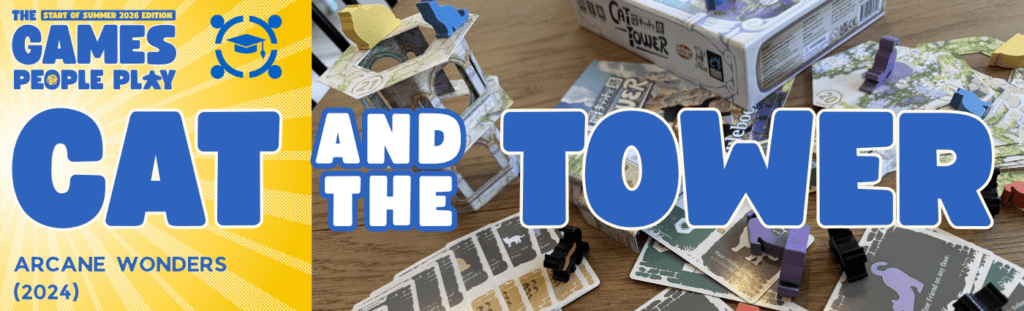
Cat and the Tower: Why Story Matters
The second game we’ve been playing this summer couldn’t be more different.
Cat and the Tower is a wonderfully charming cooperative dexterity game—an American adaptation of a small Japanese stacking game released a few years ago. On your turn, players carefully stack walls of different sizes, helping a determined little cat climb higher and higher without sending the entire tower crashing down.
Mechanically, it’s delightfully simple. But what elevates the experience is everything wrapped around it.
Before the first wall is placed, you’re introduced to a small black cat named Toto, who recently lost his mother. Believing she now lives among the stars, our hero begins climbing higher and higher in hopes of seeing her just one more time.
(And that’s where you come in).
Suddenly, every carefully placed wall feels important. Every wobble around the table draws nervous laughter. Every successful climb earns genuine celebration. Not because the mechanics changed, but because the story changed the way we experienced them. As the tower stretches closer and closer toward the stars, you can’t help but root for poor little Toto to be reunited with his mama… even if only for a fleeting moment.
As a new dad myself, that simple premise hit me harder than I expected (who’s chopping onions in here, am I right!?!) At its heart, this isn’t really a game about stacking walls of inconvenient and uneven heights. It’s a game about the bond between a child and a parent. That emotional thread transformed what could have been a pleasant little dexterity game into one we’ll remember for a long time.
It’s something Michael and I think about constantly when we’re designing cooperative classroom experiences, especially at the beginning of the school year. The mechanics matter, of course. But it’s often the story that gets students invested.
Protect the treasure. Save the kingdom. Escape the island. Recover the artifact. Deliver the message.
We’ve found that even a simple narrative can completely change the feel of an activity. Students stop completing directions and start pursuing a shared mission.
Cat and the Tower was a wonderful reminder that you don’t need an elaborate story. You just need one worth rooting for.
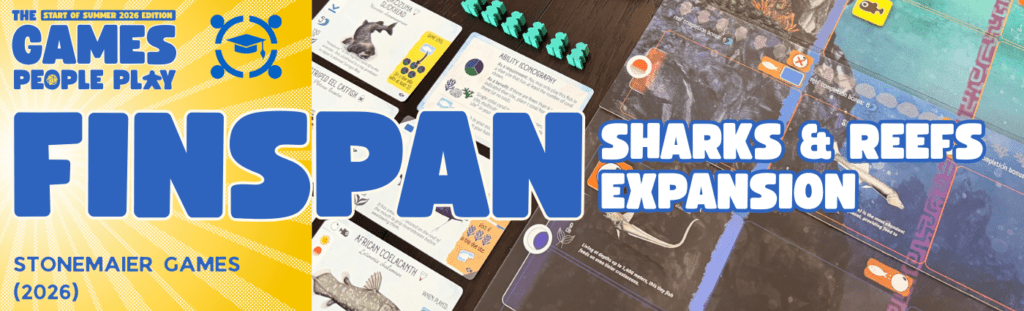
Finspan: Sharks & Reefs — Knowing When Not to Add More
The last game on our table this month isn’t actually a new game at all. It’s the new Sharks & Reefs expansion for Finspan.
My wife and I have been big fans of Stonemaier Games’ “Span” series for years. Wingspan is one of those modern classics we’ll probably never stop playing, and Finspan has quickly become our favorite recommendation for introducing new players to the series. It keeps everything we love about the original while trimming away just enough complexity to make it easier to get to the fun.
Naturally, we were excited to crack open the expansion.
What I appreciated most wasn’t that it tried to reinvent the game. Quite the opposite. It adds a few clever ideas, but they’re so intuitive that after a round or two they simply feel like they’ve always belonged. That’s harder to pull off than it sounds.
One of the easiest mistakes designers can make—whether they’re building board games or classroom experiences—is assuming every new version has to be bigger than the last. More mechanics. More exceptions. More “stuff.” Before long, players are spending more energy remembering rules than actually enjoying themselves.
The same thing happens in classrooms.
We know from the Science of Learning that working memory is limited. Students can only juggle so much new information before something has to give. That’s why the best lessons don’t just introduce new ideas—they leave room for students to process, practice, and connect them to what they already know.
That’s exactly what Sharks & Reefs gets right.
It doesn’t overwhelm the original game. It respects it. It adds depth without adding confusion, and it trusts that a few thoughtful additions can have a much bigger impact than an avalanche of new mechanics.
That’s something I’ve been thinking about as we build new resources this summer.
Sometimes the next version doesn’t need to be bigger.
It just needs to be better.