
Hi all! John here.
Last week, we pulled back the curtain on one of our favorite traditions at EMC² Learning. Every summer, Michael and I carve out a few days to get together on location, step away from the day-to-day work of creating new resources, and ask a deceptively simple question:
What are teachers telling us?
The answers come from all over. We hear them in conference hallways, over coffee after workshops, through emails, classroom photos, social media posts, and conversations with members throughout the school year. Our annual summer survey simply gives us one more opportunity to gather those voices in one place, step back, and look for the patterns that are often difficult to see in the middle of a busy school year.
That’s where the real work begins.
Individual comments become recurring themes. Recurring themes become priorities. Priorities become projects. Before long, those projects find their way into new resources, refreshed favorites, improved website features, conference sessions, newsletters, and blog posts. That’s why we spend so much time reading every response. A survey isn’t the destination. It’s the starting point.
That’s how surveys become systems.
One of the first patterns we noticed this year was both encouraging and revealing. Teachers aren’t asking us to convince them that engagement matters. They’re asking for classroom experiences that are practical, adaptable, and flexible enough to become their own.
One member wrote, “The plug and play ability is top!” Another praised “the quality of resources, the high level of engagement from students and how easy it is to adapt resources to content.” A third shared, “There is a vast and varied resource library that allows me to always find something that can be useful for my instruction and student learning.”
As we read through the responses, one word seemed to appear again and again: adapt.
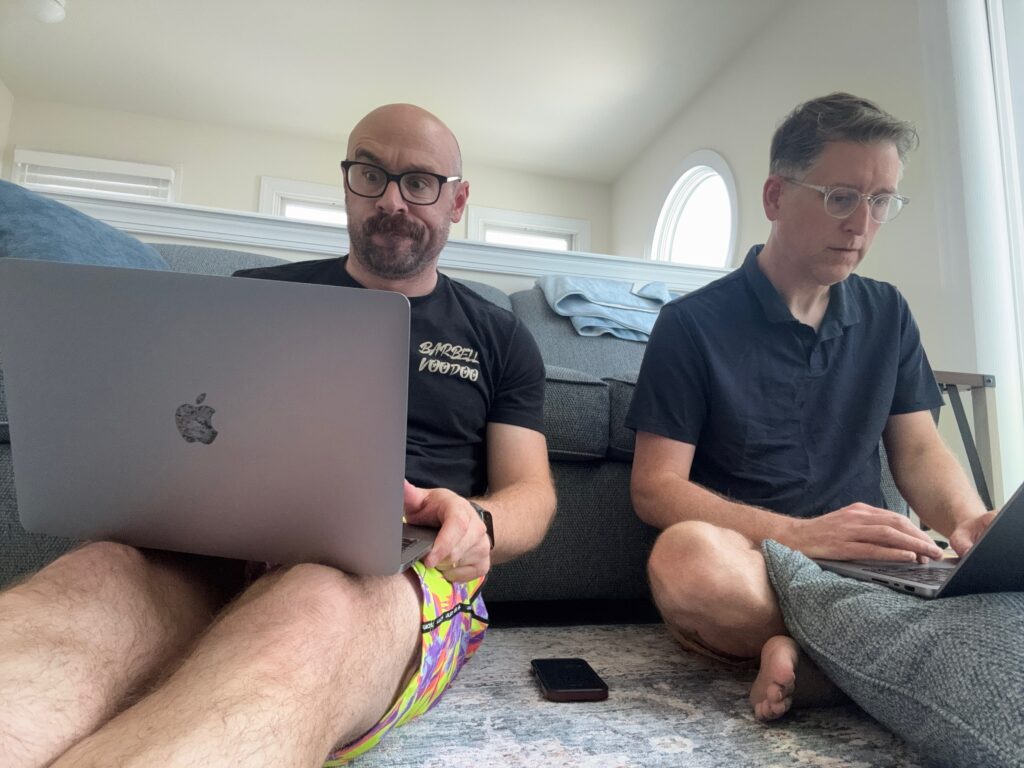
To us, that’s one of the highest compliments a teacher can give. When Michael and I first put our heads together (in those dark days of Skype calls during a global Pandemic!), we never wanted EMC² Learning to become a collection of scripted lessons where every move was supposed to be predetermined. We know all too well that the best classrooms simply don’t work that way. And we didn’t set out to turn every teacher we encountered into a carbon copy of either of our individual styles.
Great teachers borrow ideas, reshape them, add their own personality, and tailor them to the students sitting in front of them. If our resources serve as strong starting points rather than rigid destinations, then we’re doing exactly what we hoped they would do.
The second pattern was just as interesting because it reflects how much our community has grown over the years.
Not long ago, teachers were asking, “Do you have anything engaging for…?” Today, the question has shifted. More and more educators are asking, “How do I find the right resource among everything that’s already here?”
Several respondents mentioned wanting better organization throughout the site. Others asked for more classroom walkthroughs, implementation videos, and examples showing how activities have been adapted across grade levels and content areas. A number of teachers simply acknowledged that with more than 1,100 resources now available, keeping up with everything can be a challenge.
We read you loud and clear, folks!
They tell us the challenge isn’t creating enough ideas anymore. The challenge is helping busy teachers discover the right idea at the right moment, adapt it with confidence, and get back to doing what matters most: teaching. That’s a different problem than the one we were trying to solve a decade ago, and it’s one that will play a significant role in shaping the work we do this year.
You’ll absolutely continue to see new activities, review strategies, discussion protocols, and classroom-ready lesson materials. Creating those resources is still one of our favorite parts of the job. But you’ll also see us investing more time in organization, implementation support, classroom examples, and making it even easier to connect the right resource with the right teaching moment.
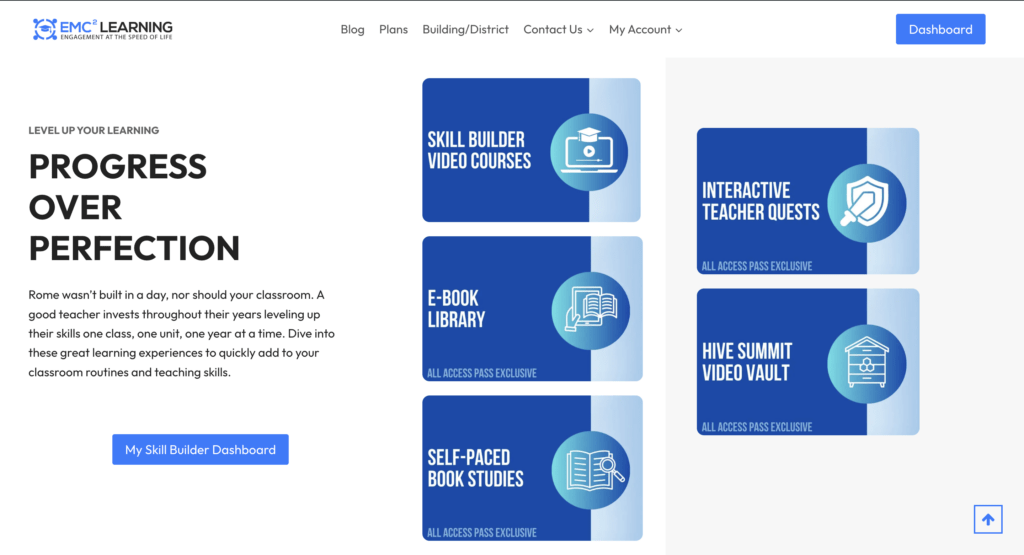
(True story: we’re literally refreshing the entire site’s look, feel, and interface as a direct result of your feedback!)
One request, in particular, appeared often enough that it deserves special attention.
Teachers want to learn from other teachers.
Several respondents asked to see more examples of resources in real classrooms. Others suggested spotlighting member adaptations, showcasing how activities have been modified for different subjects, or sharing classroom photos and implementation stories from educators across the community. Those ideas resonated with us because they’ve always been part of the vision for EMC² Learning.
We absolutely love this idea. And we’ll be making a point of incorporating even more “House Rules” suggestions and modification ideas with every resource we update and create for the 2026-2027 school year.
The resources may begin with Michael and me, but they don’t end with us.
Every time a teacher remixes an activity, simplifies directions for younger learners, adds a local connection, creates a new theme, or discovers an entirely different use for a familiar strategy, the idea becomes a little stronger. One of our goals this year is to do a better job of celebrating those stories and creating more opportunities for members to learn from one another.
If this year’s survey reinforced anything for us, it’s that the best ideas rarely begin in isolation. They begin in classrooms with teachers who are willing to share what’s working, what’s frustrating, and where they think we can do better. That’s a responsibility we don’t take lightly.
Thank you to everyone who took a few minutes to complete this year’s survey. Every comment, suggestion, celebration, and constructive critique has already found its way onto a whiteboard, into a notebook, or onto next year’s planning calendar. We won’t be able to act on every idea, but we read every one of them, and together they’ve already helped shape where EMC² Learning is headed next.
Because that’s what systems are designed to do.
They help us listen a little more carefully, improve a little more intentionally, and build something a little better than we could have built on our own.