
Let’s Be Done with One-and-Done PD
Professional development shouldn’t be a one-and-done event—it should be a continuous, intentional process that builds teacher confidence, improves student engagement, and fosters a culture of collaboration. That’s why we’re introducing Teacher Growth Cycles—targeted, 30-day learning sprints designed to help educators focus on one key area of instructional growth at a time.
Each cycle challenges teachers to experiment with proven, high-impact classroom strategies, drawn from EMC² Learning’s extensive resource library. By focusing deeply on one area, teachers can see real results in student engagement and learning while growing their instructional toolkit.
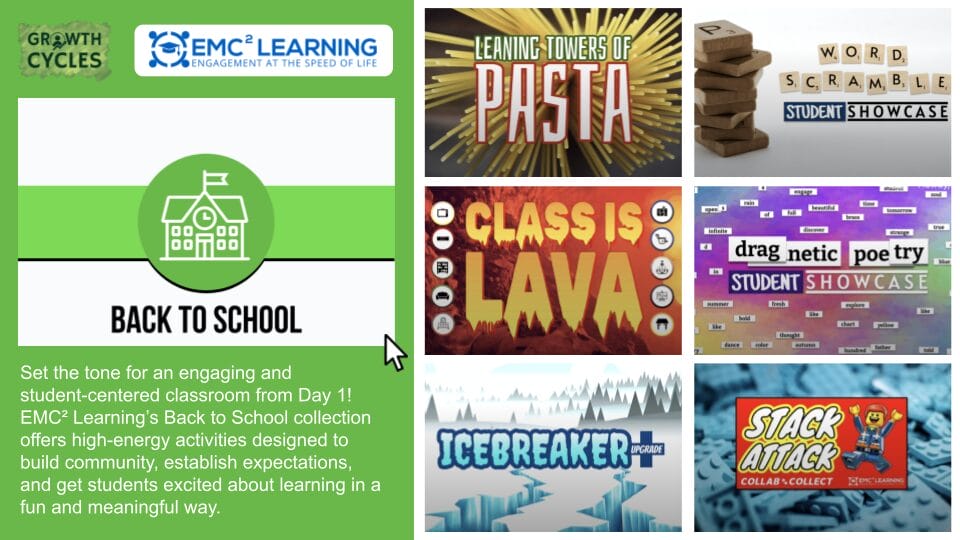
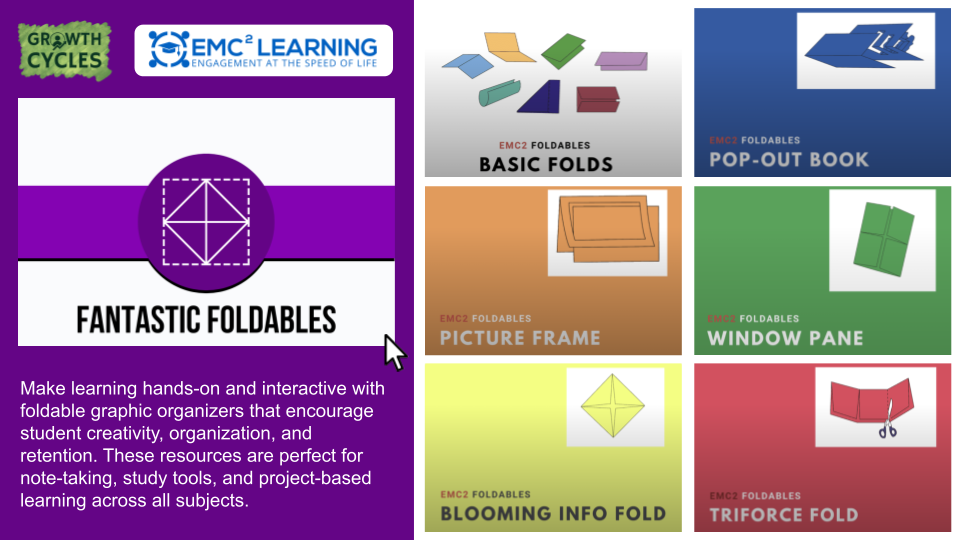
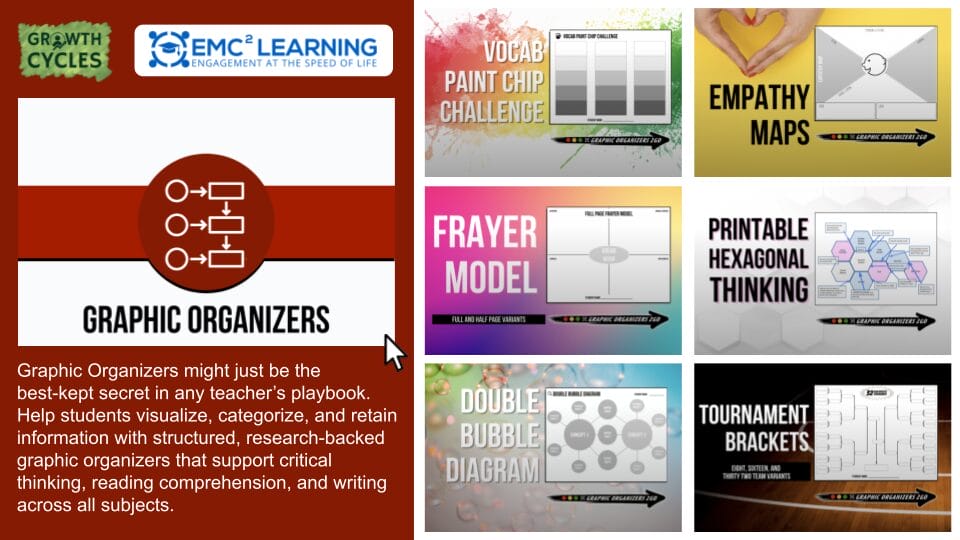
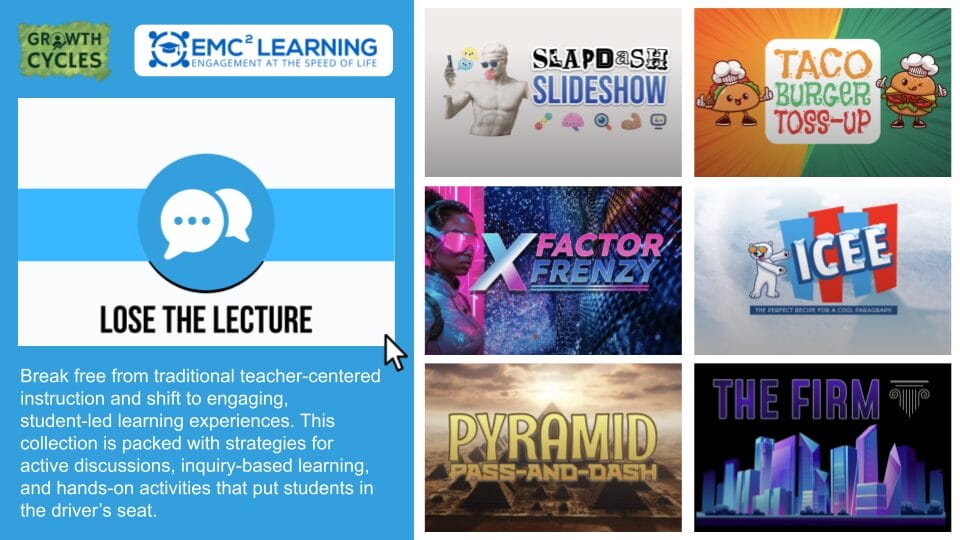
Streamline Your Rollout with Ready-Made Email Templates!

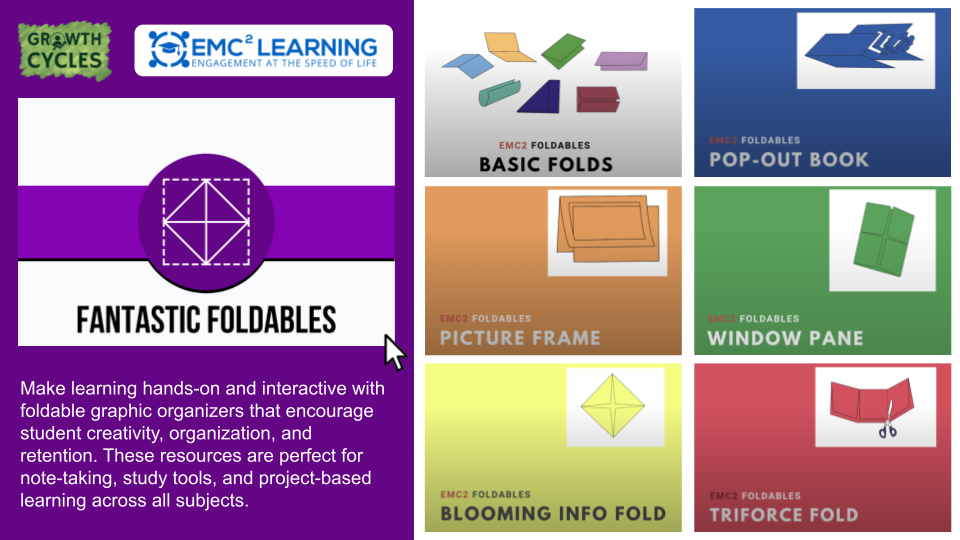



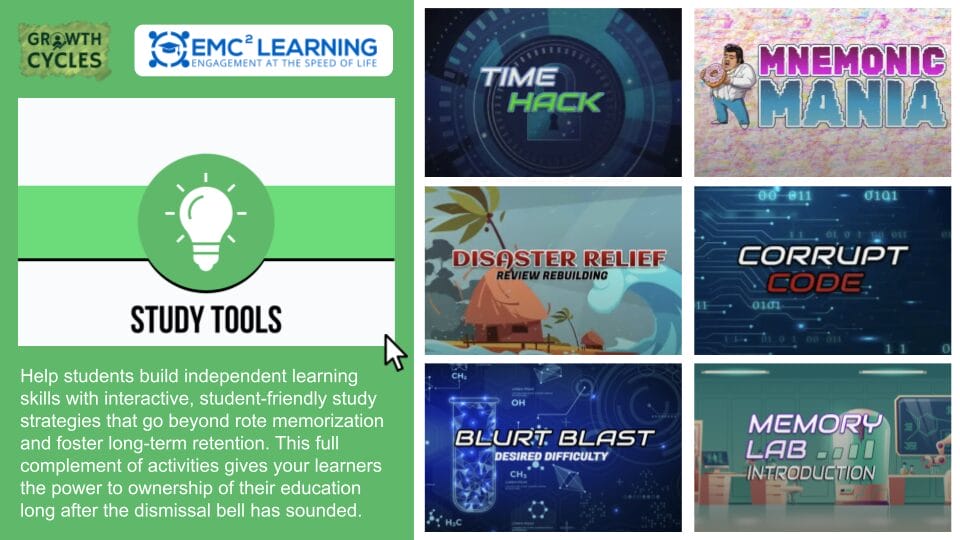
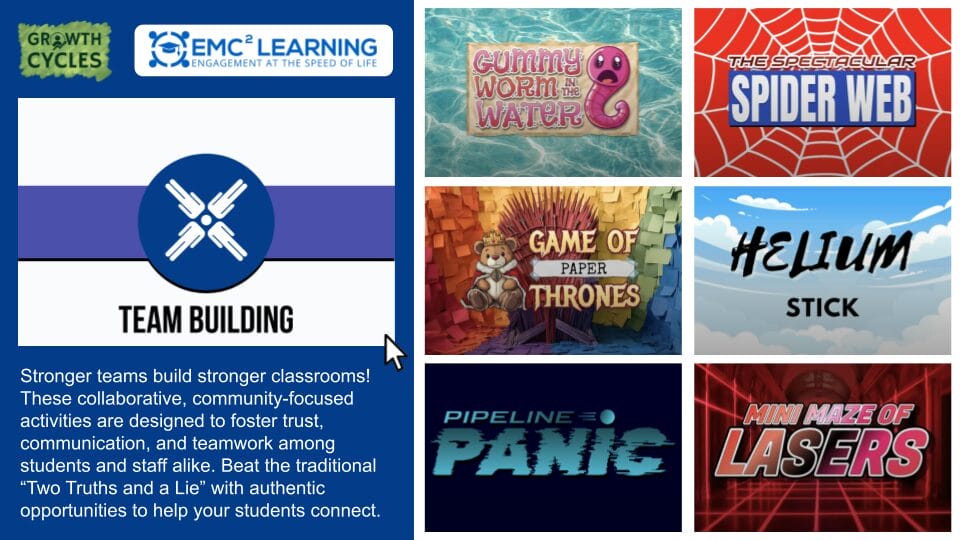
We know that implementation is everything—so we’ve made it as easy as copy and paste!
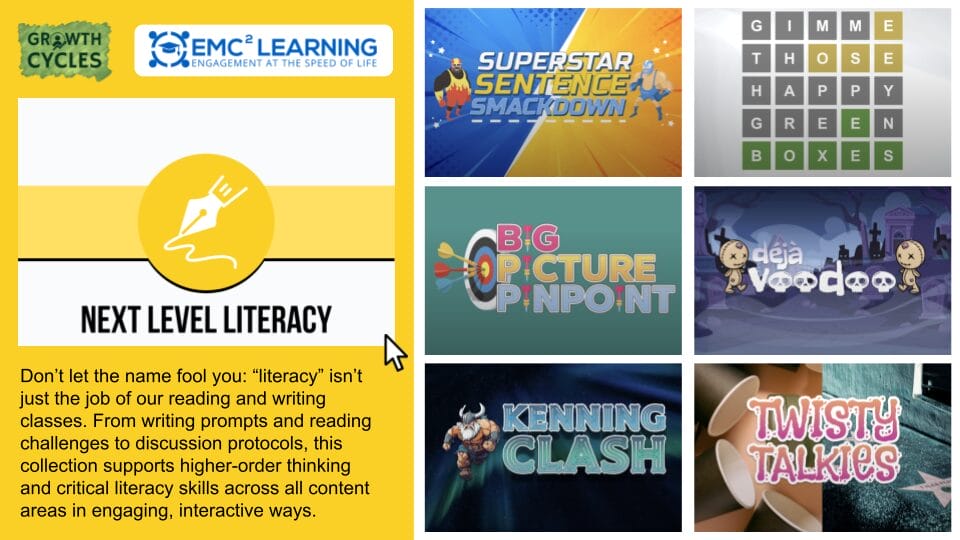
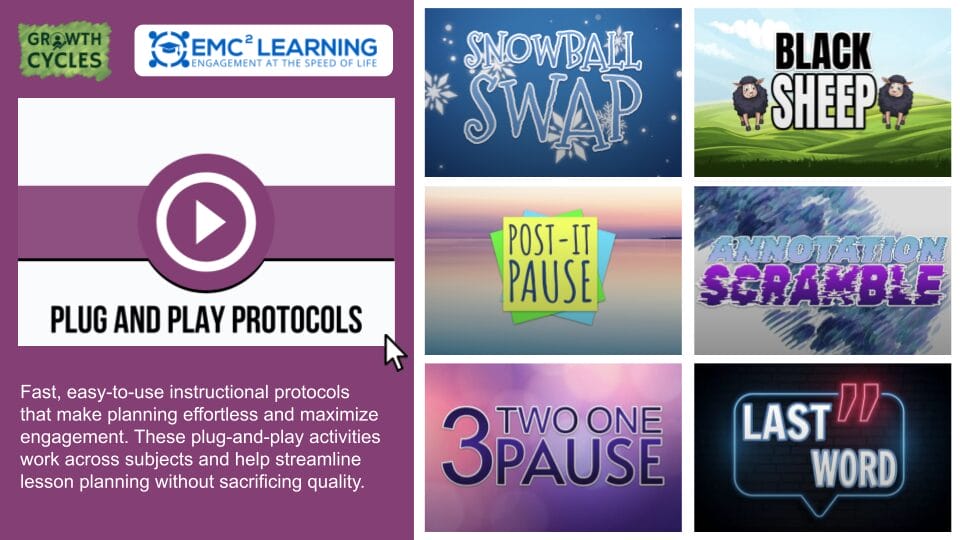
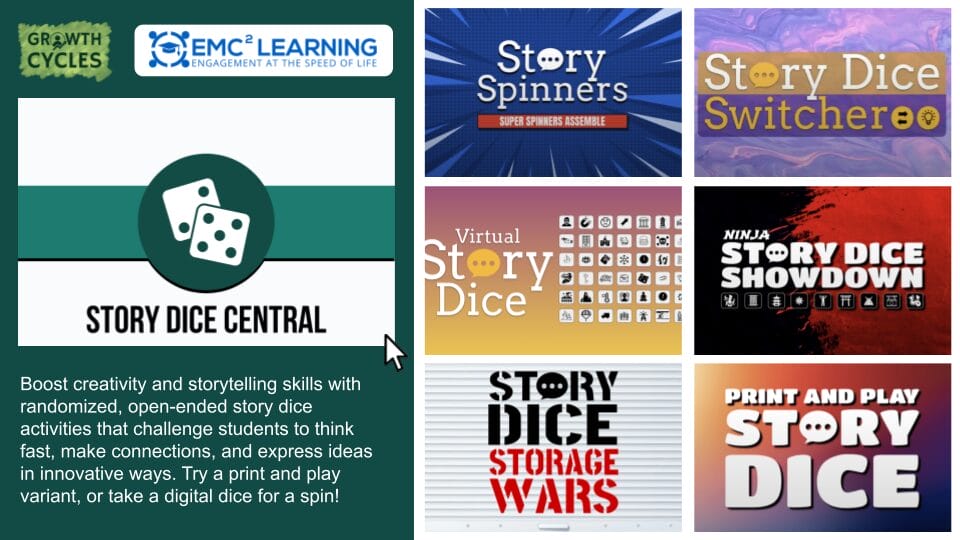
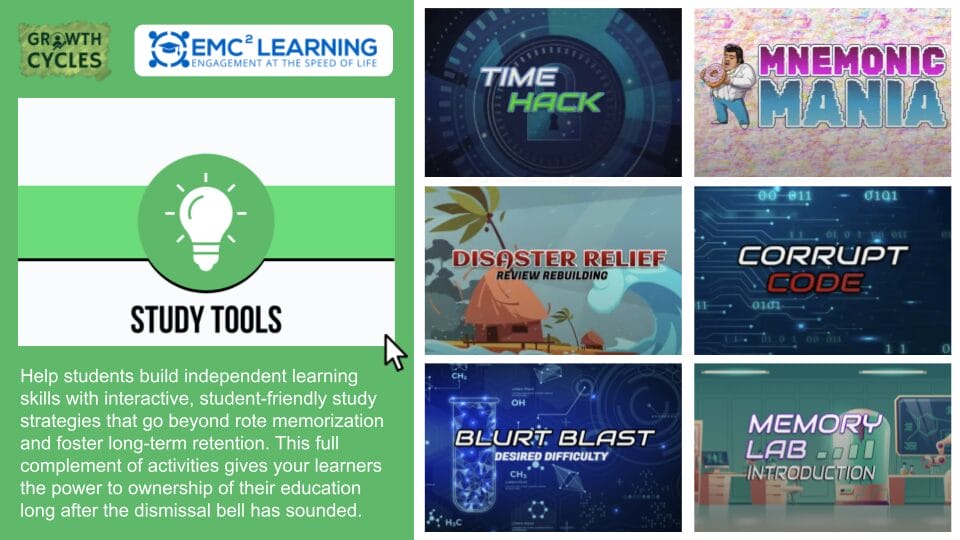
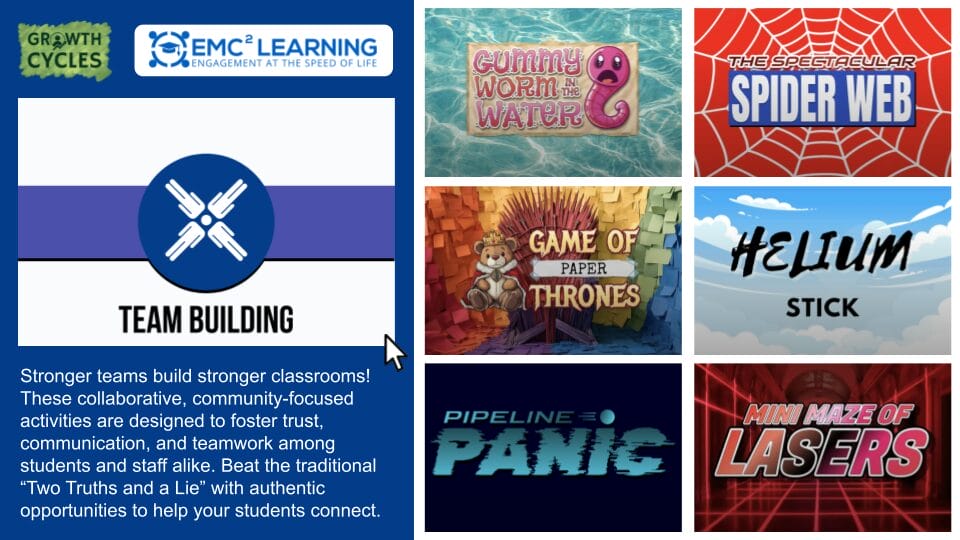
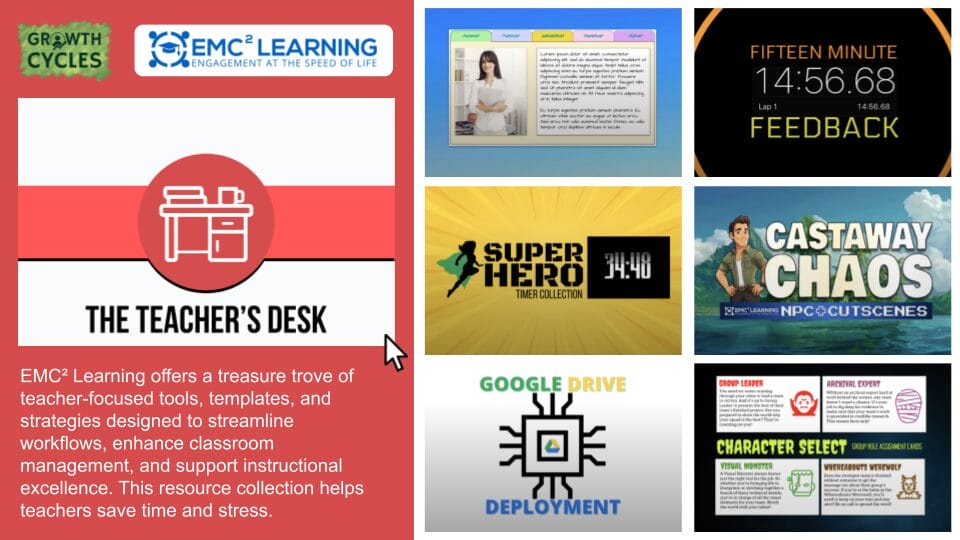
- Just select the slide of your choice, copy it, and paste it into an email to your faculty.
- Each template is pre-formatted with a professional look, clear messaging, and a direct link to the corresponding EMC² Learning collection.
- Use these emails to introduce Growth Cycles schoolwide, within departments, or inside PLCs—the flexibility is yours!
With the looks, links, and write-ups already done for you, all that’s left is to hit send!







A Sample Timeline for Faculty Growth Cycles
Day 1: Faculty Meeting Kickoff
- In a quick 5-minute segment during a regularly scheduled faculty meeting, an administrator, instructional coach, or lead teacher announces the Growth Cycle focus for the next 30 days.
- To spark excitement, this presenter shares a short success story from a resource in the selected category—highlighting how they used it, what worked, and any adjustments they made.
- Bonus engagement tip: Show photos or short video clips from the classroom to help teachers visualize the resource in action.
- After the meeting, teachers receive a direct link to the Growth Cycle resource collection in a follow-up email.
Day 7: Friendly Reminder Email
- A quick nudge to teachers, encouraging them to check out the resource collection if they haven’t yet.
- The email reminds them that they have three more weeks to try a resource and bring their insights to the next meeting.
- Support is available—teachers are encouraged to reach out to their department chair, team lead, or instructional coach for recommendations.
Day 14: Call for Success Stories
- The admin team reaches out via email:
“Hey everyone! Who’s tried a resource from this cycle? We’d love to highlight 1-2 teachers who’ve had great experiences—nothing formal, just a quick share-out at the next meeting!” - Teachers who reply are invited to share their story at the upcoming faculty meeting.
Day 21: Coaching & Encouragement
- Admins or instructional coaches meet with the teachers you have selected to present to ensure they feel prepared.
- This is a confidence boost! These teachers are told in advance that their work is appreciated and that their insights will help inspire their colleagues.
Day 30: Faculty Meeting Showcase & Next Cycle Kickoff
- Selected teachers present their success stories—brief, 5-minute testimonials that highlight what they tried, how it worked, and what they might tweak.
- The next Teacher Growth Cycle is introduced, with a new (or repeated) focus, kicking off another 30-day cycle of experimentation and growth.
Feel the Momentum of PD That Actually Inspires Growth
Far too often, traditional PD falls short. In the worst of cases, highly paid strangers are brought into our schools while tired, working educators are packed into an overcrowded auditorium to receive a “do as I say, not as I do” style rundown of all the things we’re apparently doing wrong in our classrooms. At best, the model is ineffective. At worst? It’s kind of insulting… especially when most PD typically amounts to little more than a bunch of suspsect big picture research (with limited classroom application) or a litany of well-meaning platitudes that inevitably fall short of creating any real, actual change.
That’s why providing your teachers with a clear, consistent commitment to regular Growth Cycles alongside the resources available to them inside of the EMC² Learning library can be a total game changer.
- It’s built for real classrooms. Teachers try one manageable strategy at a time, making implementation practical and sustainable.
- It’s teacher-driven, not admin-imposed. Growth Cycles encourage teacher-led learning and peer sharing, fostering a culture of collaboration and trust.
- It’s rooted in real data and reflection. Every cycle generates classroom-tested insights, creating a shared knowledge base among faculty.
- It builds long-term instructional capacity. Teachers develop a growing toolkit of high-impact strategies that improve both student performance and engagement.
- It respects your teachers’ time and experience. Teaching students is not the same as teaching teachers. Pedagogy is how we teach children. Androgogy is how we teach adults, and it respects the unique needs of the learners in front of us by giving them ample time to share their own lived experiences as educators while still providing just the right amount of support to help them level up their efforts towards lifelong learning.