

Hi folks! John and Michael here.
This might sound pretty obvious to those of us who are actual working classroom teachers, but far too often in the edtech world, we can’t help but feel that big-picture focus groups and highfalutin’ techno-babble bingo tend to get in the way of what really matters: the everyday challenges, victories, and decisions that shape our work with real students in real classrooms.
At EMC² Learning, we believe the best ideas don’t come from a boardroom — they come from the classroom. Every day, we’re inspired by the teachers who use our resources to create active, student-centered spaces filled with creativity, collaboration, and curiosity. And sometimes, the questions those teachers ask help us grow right alongside them.
Recently, a fifth grade teacher (and one of our site members) named Jason reached out with a question that cuts right to the heart of playful learning:
“While the resources are engaging, interactive, and challenging, I’m often left wondering how to assess kids individually during these types of lessons. I understand that not every lesson needs a grade, but as a teacher of four subjects, I sometimes struggle with how to ensure learning targets are also being met.”
– Jason G., Fifth Grade Teacher
It’s a thoughtful question — and one that many teachers wrestle with. How can we balance engagement and accountability? How do we capture evidence of learning without reducing creativity to a number?
Here’s what we shared with Jason:
We encouraged him to shift the focus from grading outcomes to grading growth. Instead of assigning points for performance, students can set clear personal goals before play begins — goals tied directly to learning standards or soft skills like collaboration, communication, or perseverance.
After each activity, students reflect on how well they met those goals, citing real evidence from their gameplay. Honesty and self-awareness become the criteria for assessment. Teachers might use a simple three-point scale (clear goal, supporting evidence, authentic reflection), guide deeper introspection or next steps through Socratic Seminars using EMC² Learning’s H.O.T. Question Helpers, or visualize progress with our Personal Record Rubrics to track growth over time.
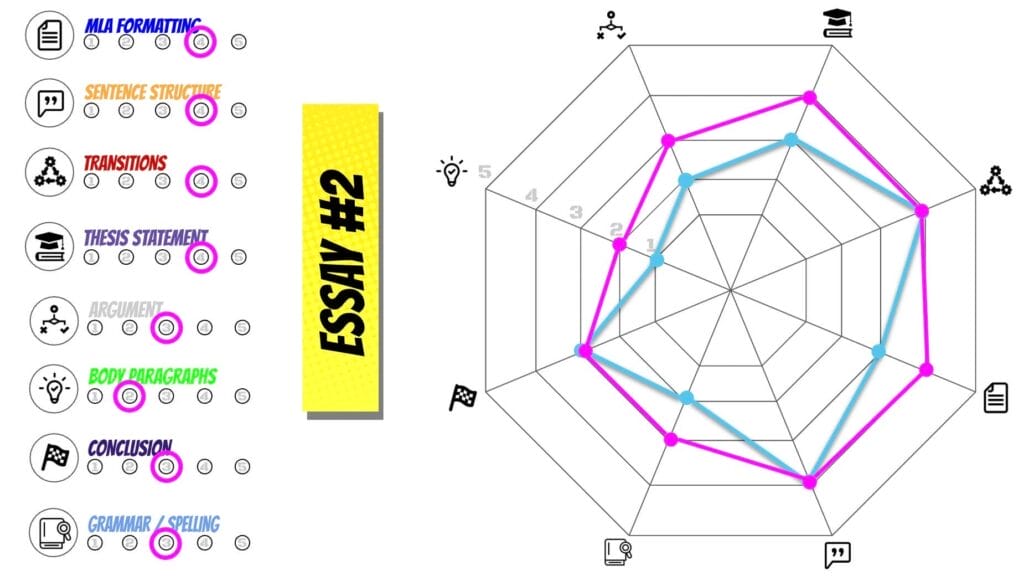
This approach reframes assessment as an act of intentional reflection, helping students see themselves as active participants in their learning rather than passive recipients of grades. It’s a subtle shift — but one that the savviest video game pros, seasoned athletes, and board game aficionados understand instinctively:
Playing with purpose isn’t about chasing the high score. It’s about thoughtful decision-making, calculated risk-taking, and learning how to adapt to an ever-changing series of challenges. To win consistently, you have to master the movements that put you in position for success — and the surest way to win is to focus on the process, not the product.
Jason’s follow-up captured that spirit perfectly:
“It’s not so much getting a formal grade out of it as it is holding them each accountable for contributing, thinking, and learning. I’ll definitely take into consideration the ideas about reflections, goal-setting, and self-evaluation.”
We couldn’t agree more.
And this exchange is exactly why we do what we do.
Believe it or not, there’s no massive corporation running things behind the scenes at EMC² Learning. Eleven hundred resources later (and counting), every activity on our ever-expanding platform is built and maintained by two real-life, honest-to-goodness teachers — Michael in sixth grade, John in high school — with a shared love of playful pedagogy and a lifelong commitment to student-centered learning.
Teachers like Jason help shape and strengthen that work through ongoing collaboration and field testing, asking exactly the kinds of thoughtful questions that push us to design better, sharper, and more flexible tools for classrooms everywhere.
We’re continually refining our platform to help educators create teacher-centered systems that empower student-centered classrooms. And the conversation doesn’t stop here. If you’ve ever found yourself asking similar questions about how to balance engagement and accountability, you’re not alone. And we’re listening.
Yes, really.
Because that’s exactly what it means to play with purpose.
The activities featured in this blog post are just a handful of the 1,100+ resources available and on their way to arrive shortly in the EMC² Learning library. This entire library is available to all members with an active Engagement Engineer or Engagement Engineer PLUS account, and is included with your annual site membership. We hope you’ll consider joining us as an Engagement Engineer to unlock a full year of site access. For complete details including our exclusive limited time offer for annual site membership, click here.