
Each summer, the EMC² Learning team (Michael and John) take a few days to step away from the day-to-day work of building resources and focus on something that’s arguably even more important: taking feedback directly from our 10,000+ member community to improve the system that builds them.
Whether we’re on-location together in sunny Milwaukee or the sweltering East Coast, our “Summer Summit” is part corporate retreat, part family vacation. There are board games (strictly for research and development, of course), plenty of laughs, and more good food than either of us cares to admit. This year we’re taking on the added challenge of finding recipes that keep everyone happy now that Michael has officially joined Team Vegetarian. Suggestions welcome!
But beneath all of that is the real reason we get together: we stop producing long enough to reflect.
If you’ve spent any amount of time around EMC² Learning (thank you for that, by the way!), you’ve probably noticed our logo: four silhouettes surrounding a graduation cap. Most people see a community of thinkers with students at the center. And they’re absolutely right! But there’s another layer hiding in plain sight.
Our logo also represents the continuous improvement cycle that has quietly guided this company since the very beginning.
Plan. Do. Study. Act.
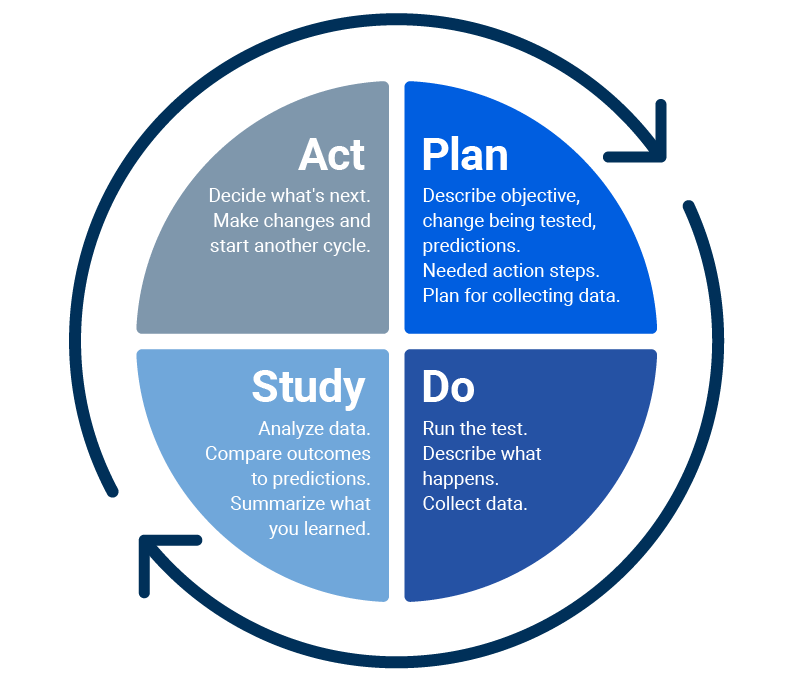
Whether you know it as the Deming Cycle, PDSA, or simply continuous improvement, the idea is beautifully simple: make a plan, put it into action, study the results, adjust what needs adjusting, and repeat. Great teachers understand the power of systems thinking because they live it every day. As two working educators ourselves, we split our time between the classroom during the “9-to-5” and the EMC² Learning community during the “5-to-9” (along with plenty of nights, weekends, and summer days). Systems thinking isn’t just how we approach our own classrooms: it’s how we design every resource, every project, and every experience we create for the more than 10,000 educators who make up the worldwide EMC² Learning community.
The Plan phase is where our library of more than 1,100 classroom resources comes in. Every activity, lesson framework, writing routine, and classroom experience exists to help teachers spend less time creating lessons from scratch and more time creating memorable learning experiences.
The Do phase belongs entirely to you.
Every morning, classroom doors open and lesson plans meet reality. A fourth grade teacher in Boston adapts a research activity for younger learners. A high school teacher in Sacramento turns Emoji Kitchen into a playful AP Spanish writing challenge. One class finishes early while another needs another day. Great teachers notice, adjust, and keep moving. And the “game” unfolds naturally. Organically. And with all kinds of internal momentum that makes students AND teachers excited to come back to their classrooms for the next levels of purposeful play.
Then comes our favorite phase.
Study.
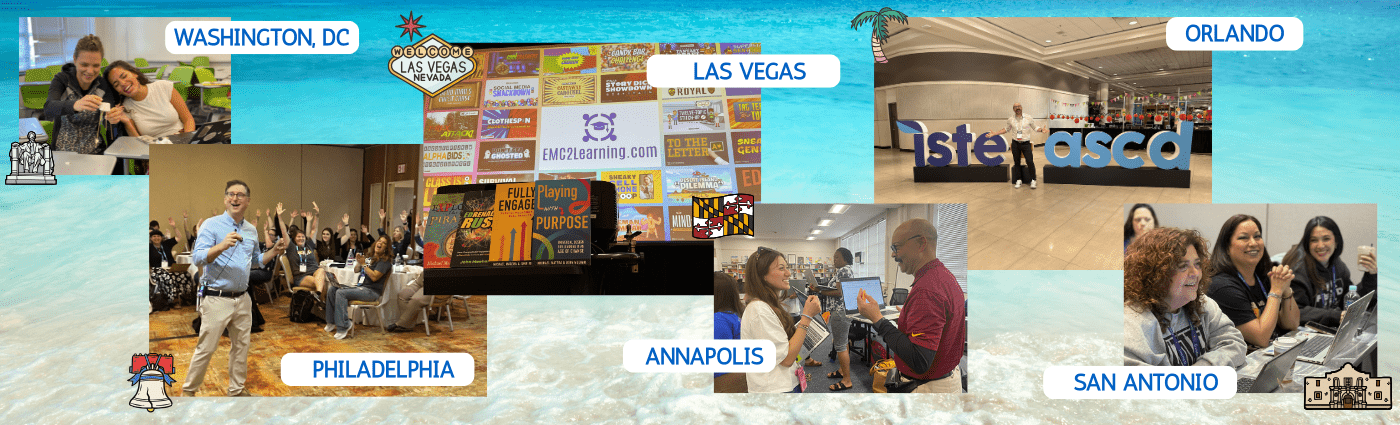
Throughout the year, teachers tell us what’s working. We hear it in conference hallways, over coffee after sessions, through emails, classroom photos, social media posts, presentation feedback, and conversations with members from around the world. Then, every summer, we intentionally gather one more piece of the puzzle through our annual planning survey.
To be crystal clear: we know that no single conversation can ever tell the whole story. But taken together, those conversations begin to reveal patterns. We start to see what’s resonating, where teachers are still running into friction, which ideas deserve another season, and which ones deserve another look. That’s the moment feedback stops being a collection of opinions and starts becoming direction.
James Clear writes in Atomic Habits, “You do not rise to the level of your goals. You sink to the level of your systems.” That idea has become something of a north star for us. We’re not interested in chasing every shiny new idea that comes our way. We’d much rather build a system that helps us recognize the right ideas when they appear.
After all, we’re still classroom teachers ourselves. EMC² Learning isn’t built from a corporate office. It’s built between lesson plans, grading, faculty meetings, and everything else that comes with teaching. We don’t have the luxury of chasing every interesting idea. We need systems that help us decide which ideas deserve our attention.
That’s why this week matters so much.
Like movie studios mapping out their biggest releases months in advance, we build our year around a handful of “tentpole” projects that anchor everything else we create. Once those priorities are set, the hundreds of smaller decisions become much easier to make.
Only then do we move into the final phase.

Act.
Then comes the Act phase. This is where our whiteboards (and notebooks, and text message threads, and shared drafts folders, and…) start filling up.
Some ideas get circled immediately. Others get crossed off. A few survive the debate long enough to earn a spot on the calendar. We sketch out our biggest “tentpole” projects for the coming year, decide what needs to be built first, and leave with a roadmap that will guide just about everything we create over the next twelve months. And on average? We produce somewhere between 100 and 200 resources each year. Not too shabby for two working classroom teachers, if we do say so ourselves!
Will we get every decision right? Of course not.
But we’d much rather spend one week together each summer making thoughtful decisions based on what teachers are actually telling us than spend a year chasing whatever happens to be shiny or trending. (Oh we see you, alright, “six-seven.”). And this simple PDSA cycle keeps our creative wheels turning all school year long, even when times get busy and life gets in the way to the point where passing moments inspiration might invariably start to run dry.
If there’s one idea we’d encourage you to borrow, it’s this: don’t wait until next June to reflect on your own practice.
Whether you’re planning with a grade-level team, leading a PLC, or simply thinking about your own classroom over a cup of coffee, take a few minutes to ask yourselves:
- What earned another “season?” Which lessons, routines, or projects are worth bringing back because they truly made a difference?
- Where did your “audience” (students, faculty, etc.) tell you the system was breaking down? Frustration usually isn’t random. It’s often pointing toward your next improvement. And getting in the habit of regular surveys can be super helpful for sussing out this sort of thing!
- What’s ONE change you’ll commit to testing this year? Not ten. Not something vague and squishy (“This year I’ll be a better teacher” is great. But what does that look like when the rubber hits the road?). Just one. Small, intentional adjustments have a funny way of becoming meaningful improvements over time.
That’s the beauty of continuous improvement. Don’t reinvent the wheel. Refine it.
Plan. Do. Study. Act.
Hey folks! John here. If you’ve made it this far, we’d love to send you back to school with one of our favorite professional learning activities.
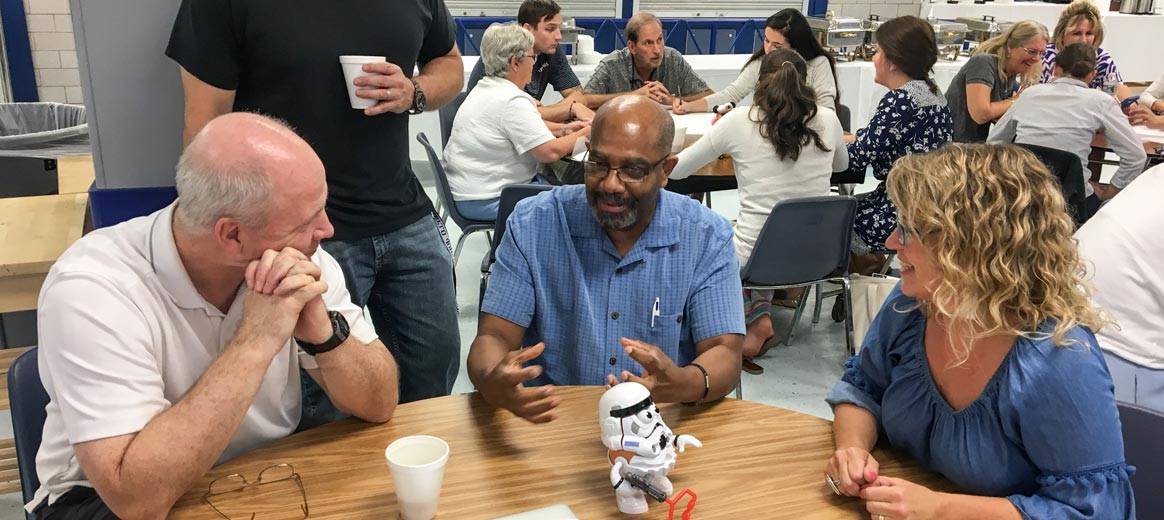
Around EMC² Learning, we call it Holy Potatoes.
Our version is inspired by the classic Mr. Potato Head exercise developed by improvement expert Dr. David M. Williams, who transformed a familiar toy into a surprisingly powerful way to experience the Plan-Do-Study-Act cycle. Over the years, the activity has found its way into hospitals, universities, businesses, government agencies, and schools around the world because it demonstrates an important truth: meaningful improvement rarely comes from one giant leap. It comes from a series of small, thoughtful adjustments.
I was first introduced to the activity while serving on the Bill & Melinda Gates Foundation’s Teacher Advisory Council, and I’ve never forgotten it. In less than an hour, a room full of educators discovers (rather than simply hears!) why iterative design works.
Since then, Michael and I have adapted, remixed, and facilitated our own version with teachers, instructional coaches, principals, and district leadership teams across the country. Every time, the debrief becomes less about potatoes and more about people. Teams naturally begin talking about communication, planning, evidence, feedback, and the power of making one good decision at a time. In short? I recommend it because it WORKS. And I literally just used this exact same activity again this week while working with my school’s Instructional Leadership Team.
So this seemed like the perfect way to end a blog post about continuous improvement. Here’s our way of saying thanks for reading all the way to the bottom.
Download Holy Potatoes for free, grab a few colleagues, and give it a try at your next faculty meeting, PLC, leadership retreat, or back-to-school workshop.
After all, the best way to understand the PDSA cycle isn’t to read about it. It’s to experience it!
No time for hesi-taters, as they say.