

In Disney’s 2021 movie Encanto, a chart-topping hit by Lin Manuel Miranda famously declares that nobody wants to talk about Bruno. He’s misunderstood. Misrepresented. Too weird. Too risky. Too complicated.
Sound familiar?
As of this writing, Bitcoin is trading for just over $103,000. Whether you think that number is a futuristic marvel or the financial equivalent of Beanie Babies on the blockchain, there’s no denying one thing: this is one of the most consequential innovations of the 21st century.
So why aren’t we talking about it in our schools and classrooms?
Truthbomb time…
Today’s students are starving for relevance. In the aftermath of the pandemic (and in the age of AI), today’s learners simply don’t have time for content or concepts that they feel are of little value to their increasingly fast-paced lives outside of the classroom. Highfalutin theory and storied academic tradition might still be all well and good, but today’s students want to know that what they’re learning matters beyond the classroom walls. Meanwhile, teachers everywhere are grappling with the growing gap between what we teach and the tools our students are using.
Stop us if you’ve heard any of these…
AI-generated essays.
Shortcut apps.
Ever present dependence on smartphones.
And TikTok-sized attention spans that feel like they’re shrinking by the second.
Yet, while the world outside is racing ahead—fueled by those sorts of mysterious, almost “Bruno-like” innovations like cryptocurrency and blockchain technology that many educators might not yet fully understand—we risk being left behind. This isn’t just about Bitcoin. It’s about whether education is keeping pace with the world our students are already living in.
You guys. We need to talk about crypto.

The power of cryptocurrency isn’t just in the currency—it’s in the conversation. And even if this whole crypto bubble is nothing more than the 2020’s answer to a pet rock or a pyramid scheme, the topic is absolutely brimming with potential for sparking some serious engagement, meaningful lesson plans, and powerful opportunities student-centered learning for today’s learners. At its core, crypto represents curiosity: about how systems work, how the world is changing, and what the future might look like. And that kind of curiosity? It’s exactly what education should be nurturing.
But too often, our curriculum stays stuck in the past while the world speeds ahead. That’s where EMC² Learning comes in… ready and able to help busy educators keep tabs on these changing times by offering all sorts of playful teaching tools and techniques to help them foster “Engagement at the Speed of Life” (as we like to say).
Our platform is designed to help educators reset outdated paradigms—with fully editable, cross-curricular resources that empower teachers to teach smarter, not harder. These aren’t just plug-and-play worksheets. They’re curiosity engines. Conversation starters. Authentic learning moments waiting to happen.
And best of all? You don’t need to be a blockchain expert to bring big, bold conversations into your classroom. Whether you’re a STEM specialist or a humanities hero, cryptocurrency can be a jumping-off point for meaningful, standards-aligned instruction that’s relevant, rigorous, and real.
Here are just a few ideas of how you might be able to approach this topic (and how EMC² Learning resources can help)!


History: Research That’s Binge-Worthy
Unit Focus: From barter systems to gold-backed economies to blockchain networks, students explore how currency has evolved—and how it continues to disrupt and reshape history.
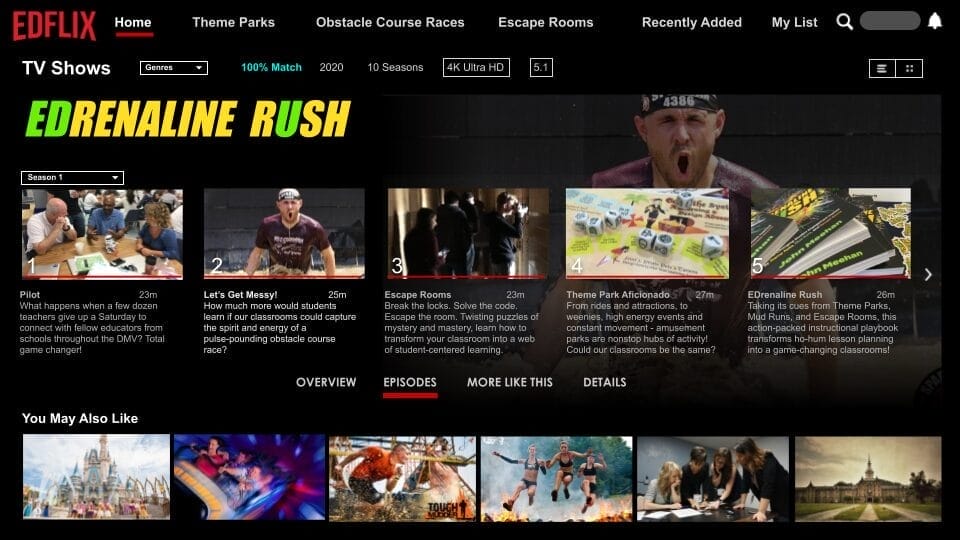
EMC² Learning Resource Spotlight: EDflix Binge-Worthy Research Template
Give students the tools to produce their own docuseries-style breakdown of economic revolutions throughout history. With the fully editable Google Slides template from EMC² Learning, students can creatively showcase everything they’ve learned in a format that mirrors the streaming content they already love. Each “episode” in their series can explore a different era or innovation—from the rise of coin-based trade to the dawn of decentralized finance—building a portfolio that’s smart, stylish, and student-owned. Even better? Students are showing what they know while providing a full-blown annotated bibliography with working links to every source they find along the way. Simply pop and swap out the default images and text, and add whatever content they’d like!
This is a research project with serious staying power. And because the template is plug-and-play, it works beautifully in any course where students are ready to show what they know—with relevance, rigor, and real-world connection.
Math & Economics: Play the Market, Learn the Math
Unit Focus: Students explore real-world applications of percentages, probability, and financial decision-making as they track crypto trends, model market behavior, and investigate the risks and rewards of investing.
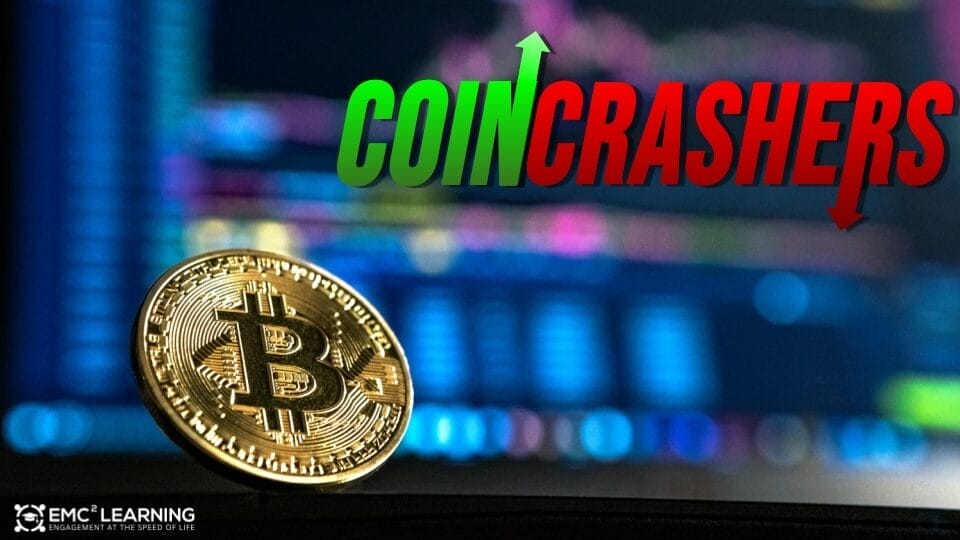
EMC² Learning Resource Spotlight: Coin Crashers
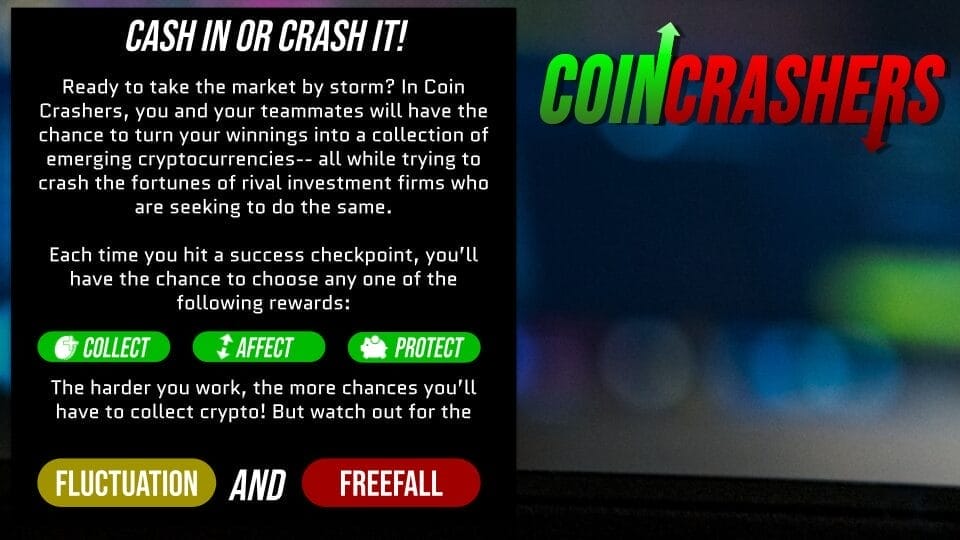
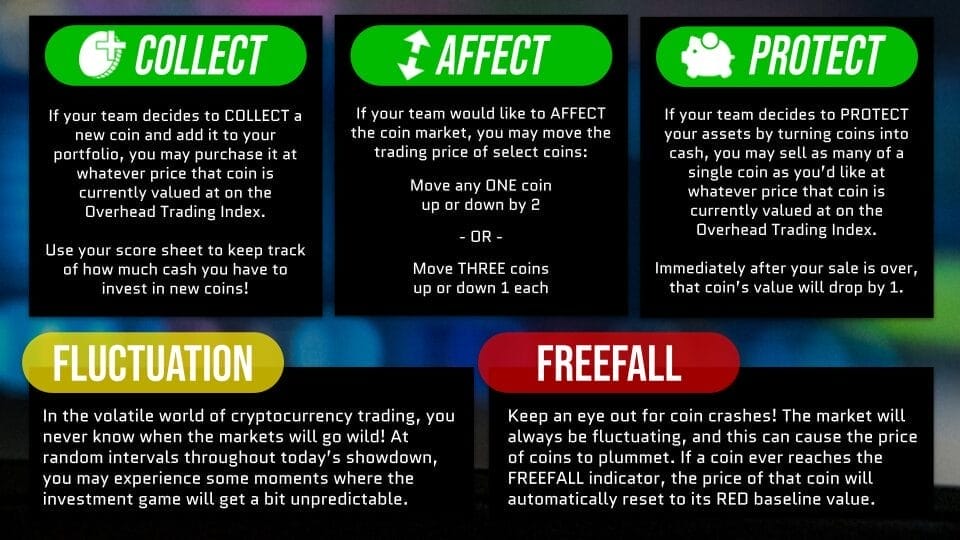
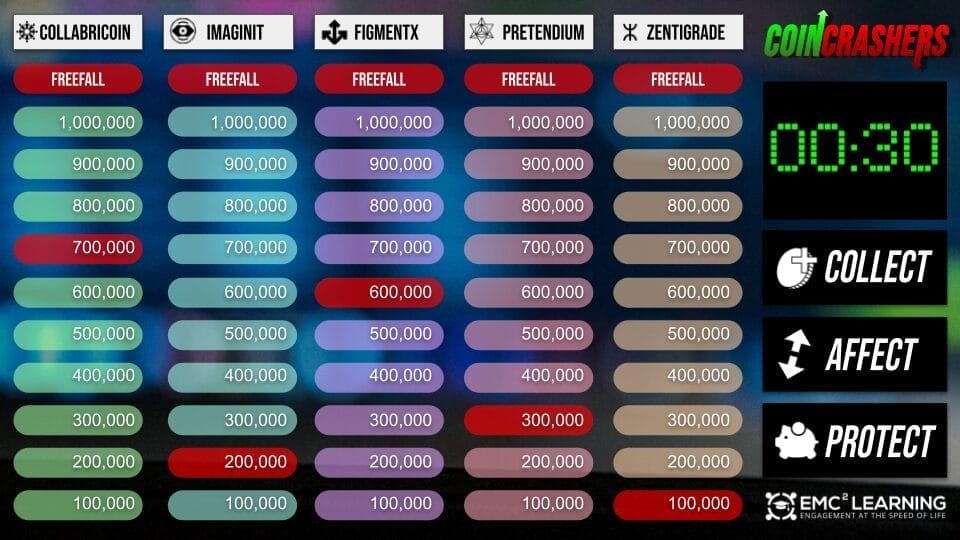
We’re spotlighting this activity as a sample math resource, but it really can work for any course or content area. In this crypto-inspired review day simulation, students complete problem sets from your existing curriculum—book work, practice sheets, or teacher-created questions. Each time they hit a success checkpoint, they earn the opportunity to “trade” in a high-energy crypto market. Will they collect new coins, affect the value of existing currencies, or protect their holdings before the market crashes?
Coin Crashers is the perfect blend of content mastery meets market mayhem—and once the dust settles, it opens the door for deeper reflection. Why are some coins more volatile than others? What real-world forces influence these swings? What risks do investors face?
This is a review activity that feels more like a strategy game—and it creates a meaningful inroad to bigger economic conversations once the final portfolios are tallied.

World Languages: Global Perspectives with Local Relevance
Unit Focus: Students explore cryptocurrency through an international lens, analyzing how various countries adopt, regulate, or outlaw digital currencies—and what those decisions reveal about power, freedom, and societal values. All while practicing key vocabulary (in the target language of your choosing, of course)!
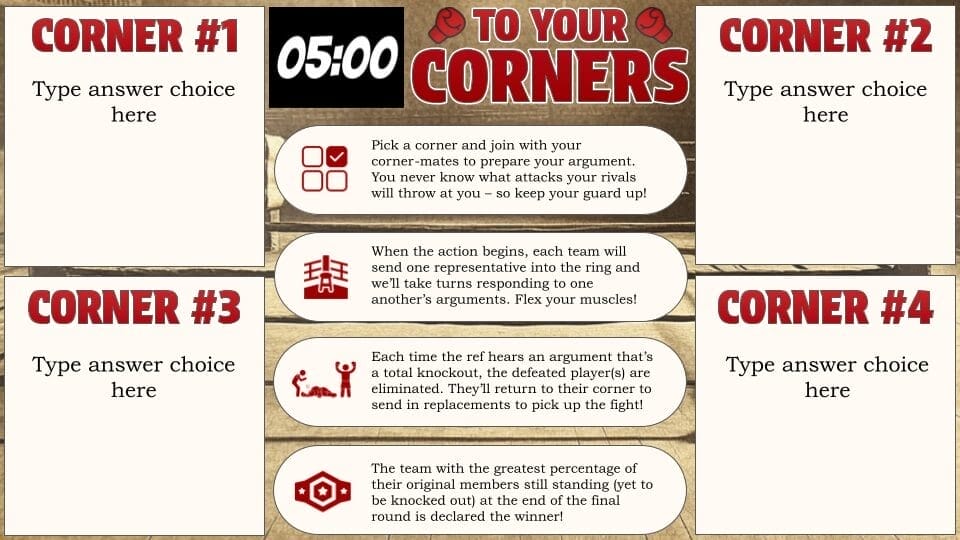
EMC² Learning Resource Spotlight: To Your Corners
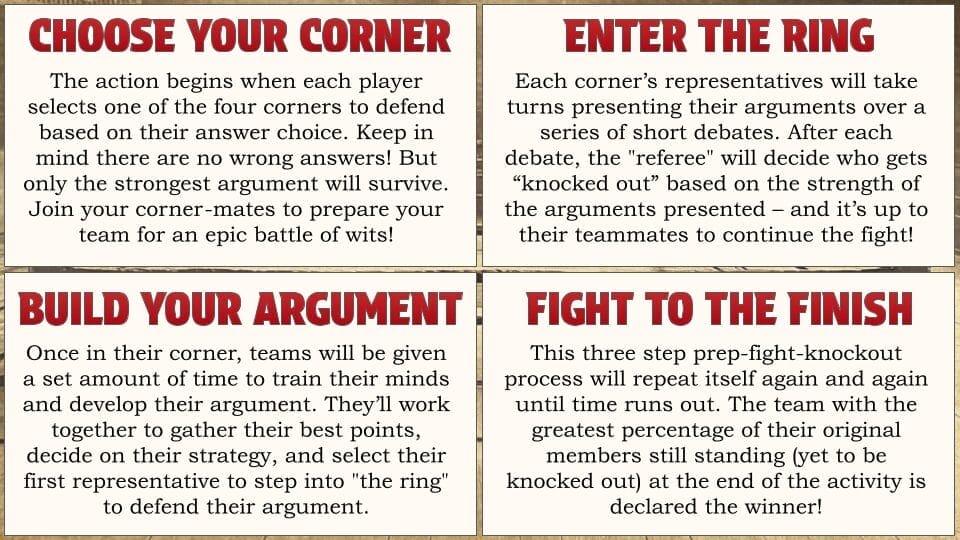
In this dynamic, discussion-driven activity, students take a stance on a provocative prompt—like “Should every country adopt cryptocurrency?” or “Is financial freedom a human right?” They then collaborate in the target language to build their case, use the internet to conduct relevant research to help support their claims, present their arguments, and respond to counterpoints. After the debate, they’re invited to reflect and decide: stay in their corner or switch sides?
As students explore countries like El Salvador, where Bitcoin adoption offers hope against authoritarianism, or China and Saudi Arabia, where crypto is illegal, they gain insight into global power structures, cultural norms, and censorship. What begins as a language lesson quickly becomes a deep dive into global citizenship and modern-day resistance.
It’s a bold, adaptable format that builds fluency, empathy, and intercultural awareness—giving students a meaningful reason to speak up and think critically on the world stage.


Science: Debate the Cost of Innovation
Unit Focus: Students investigate the environmental impact of cryptocurrency mining—examining its massive energy demands, carbon footprint, and the race toward green blockchain solutions. Along the way, they’re asked to evaluate which trade-offs are worth it and what innovations might tip the scales.
EMC² Learning Resource Spotlight: Sticky Note Poll
What starts as a simple classroom protocol quickly becomes a catalyst for big-picture scientific thinking. Using EMC² Learning’s Sticky Note Polling, students respond to open-ended prompts like:
“Is crypto worth the energy it consumes?”
“Can blockchain ever be sustainable?”
or “Should governments regulate the carbon footprint of digital currencies?”
As students cast their votes and read their peers’ positions, conversations naturally emerge around energy production, sustainability, innovation, and ethics. And because the format invites physical movement and collaborative discussion, even complex issues feel approachable and alive.
With minimal prep required (and just a handful of sticky notes), this activity offers teachers a hands-on, minds-on strategy that helps their students turn scientific data into informed opinions—and empowers them to defend their thinking with facts, not just feelings.
English / ELA: Digging Deeper with Debate and Discourse
Unit Focus: Students engage with a range of texts and perspectives related to cryptocurrency—from environmental critiques to libertarian manifestos—and work collaboratively to analyze, evaluate, and synthesize what they’ve learned.
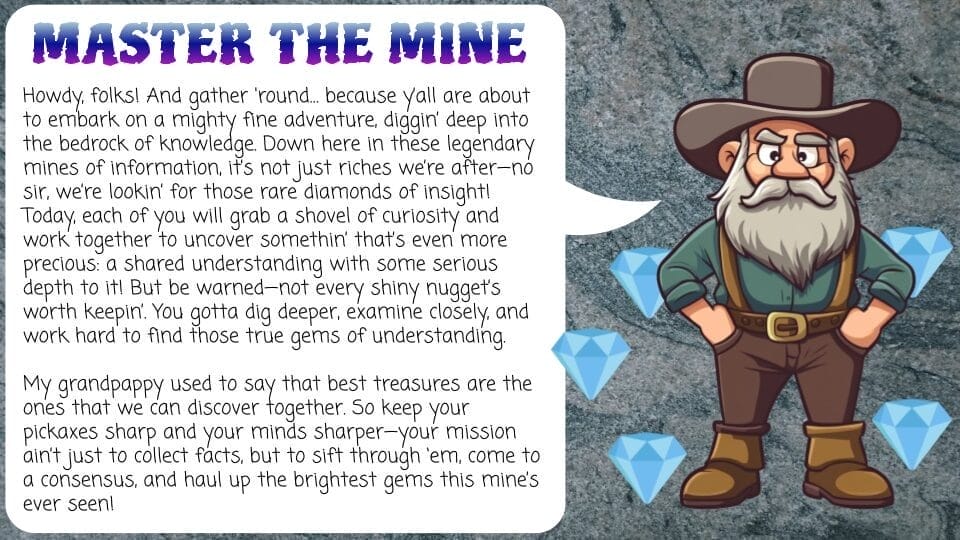
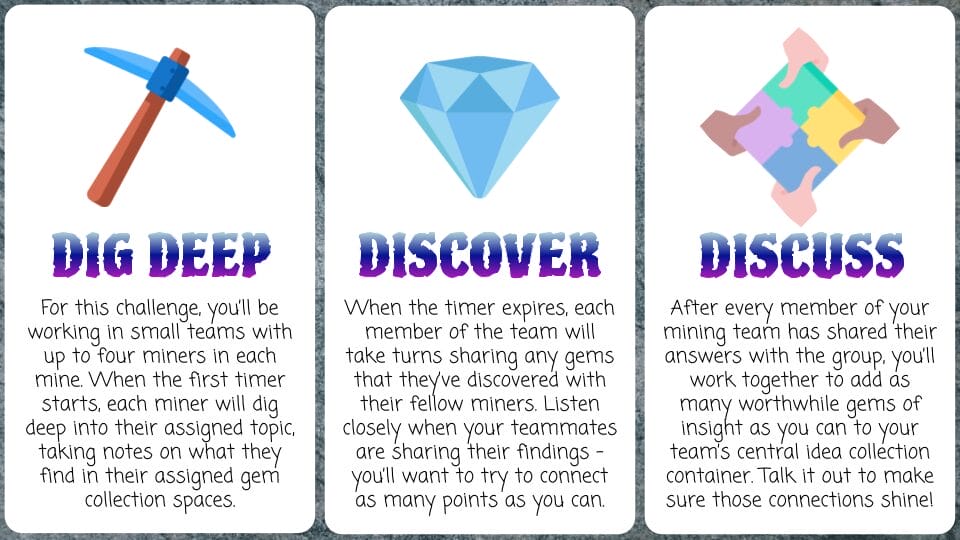
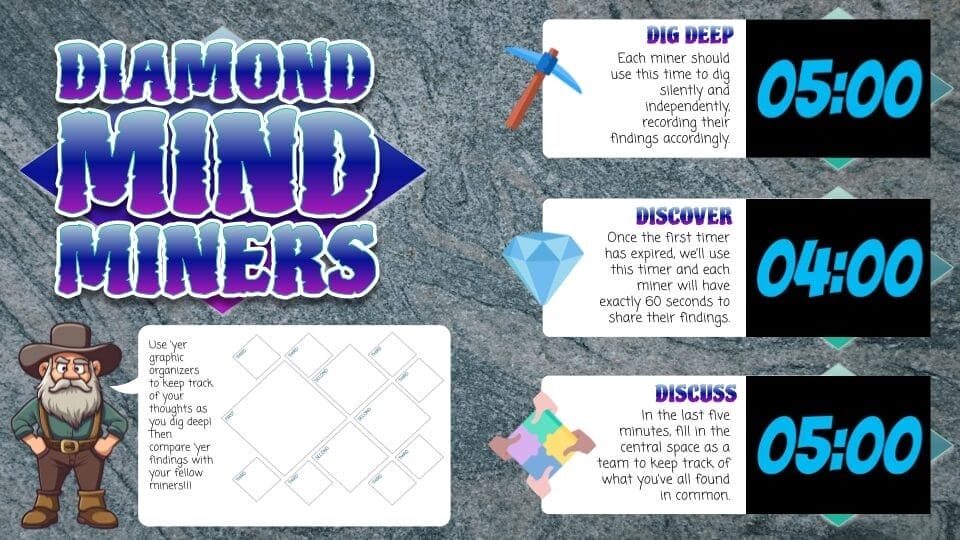
EMC² Learning Resource Spotlight: Diamond Mind Miners
In this high-engagement protocol, students take on the role of 1840s-style prospectors, digging through multiple readings and viewpoints in search of the “hidden gems” of truth. As they mine for evidence across texts and team discussions, their goal is to unearth nuanced ideas and build toward a shared consensus on big essential questions:
“Is crypto ethical?”
“Who benefits—and who’s left behind?”
“Does digital money deepen or disrupt inequality?”
Whether launching a synthesis essay, setting up a podcast discussion, or preparing your learners for an all-out class debate, this activity helps students move beyond hot takes toward thoughtful analysis. Along the way, they’ll practice close reading, collaboration, and evidence-based writing—with plenty of opportunities to pan for gold in the stream of student voice.

At EMC² Learning, we believe education shouldn’t just prepare students for tests—it should prepare them for life. That means giving ourselves permission to rethink traditional teaching paradigms, lean into what’s relevant, and reignite curiosity in the classroom.
Cryptocurrency might feel intimidating. But so did the internet. So did calculators. So did Wikipedia.
The future is already here—and our job as educators isn’t to predict it. It’s to help students ask better questions about it.
It’s Engagement. At the speed of life.
And that’s something to talk about.
The activities featured in this blog post are just a handful of the 900+ resources available and on their way to arrive shortly in the EMC² Learning library. This entire library is available to all members with an active Engagement Engineer or Engagement Engineer PLUS account, and is included with your annual site membership. We hope you’ll consider joining us as an Engagement Engineer to unlock a full year of site access. For complete details including our exclusive limited time offer for annual site membership, click here.