

Happy new year, all. John here!
In honor of the release of Wicked: For Good on home streaming services this week, we’ve had all things Wizard of Oz on the brain again. Care to join us on a trip down the proverbial yellow brick road?
It’s easy to credit the staying power of this story to the music or the spectacle. And that’s certainly part of it. But I think what really keeps it alive is something simpler. Wicked asks us to reconsider a story we thought we already understood. As the dashing Prince Fiyero so aptly puts it:
“It’s not lying! It’s… looking at things another way.”
As my wife and I spent two nights binge-watching a double dose of Wicked over the break, I found myself thinking less about Elphaba and more about the Wizard. Once the curtain comes down, everything else starts to make sense. And true to form as an educator who just can’t ever seem to flip the switch to “winter break mode,” my mind kept drifting back to schools and PD days.
Instead of flattening teachers into categories, I wonder if it might be more honest to think of them as characters on a journey.
Elphaba, Glinda, Fiyero, Boq… each one is chasing something on the surface and missing something deeper underneath. And since I’m a sucker for a great story (and a great narrative arc), I figured I’d try my hand at a Wicked cheat sheet to trace some of the parallels between the Wonderful Land of Oz and the very real (and sometimes frustratingly less wonderful) world of teacher PD.
For every archetype that follows, we’ll look at three things: the outer want, the inner need, and one meaningful gift that would actually help this individual get what they’re searching for. And no, we don’t mean the usual PD trinkets and swag (no offense to stickers, pens, or those branded stress balls).
These are the kinds of gifts that matter long after the meeting ends.
The Wizard — The PD Charlatan
“That’s what I do best, making people happy.”
Who They Are
The Wizard isn’t a villain. He’s persuasive. He speaks with certainty in spaces that crave answers. His influence often comes from presentation and messaging more than from time spent in classrooms.
Outer Want
Credibility.
To be seen as the expert with solutions.
Inner Need
Accountability to reality.
PD that can’t survive classroom conditions isn’t finished. Teachers need time, feedback, and permission to adapt without being treated like they missed the point.
A Gift You Can Offer
Invite people behind the curtain.
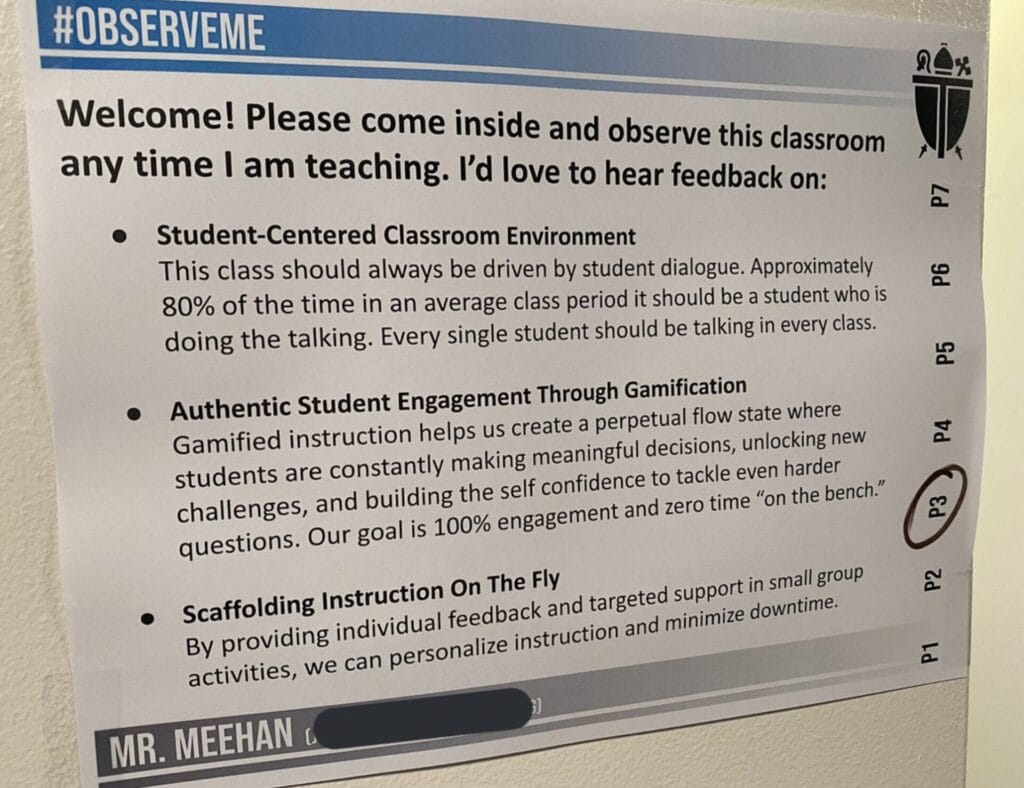
Revive the spirit of Robert Kaplinski’s #ObserveMe. Post a simple sign outside your door that says “Visitors welcome.” Invite colleagues to observe and leave a short note afterward. This breaks the false belief that observation always equals evaluation and replaces PD theater with shared practice.
Dorothy — The Reluctant Traveler
“My! People come and go so quickly here!”
Who They Are
Dorothy teachers are capable and steady. They keep getting pulled into new initiatives, new platforms, and new expectations. Just as they find their footing, something shifts again. Leaders change. Priorities rotate. The work keeps moving.
Outer Want
Simply stated? “Dorothy” teachers are looking for direction. They often feel like they’re caught in the center of a whirling cyclone. And they’re eager to take hold of anything that feels even remotely close to concrete plan of action (no wonder that poor girl decided to throw a bucket of water at the Wicked Witch).
Inner Need
But here’s the secret: behind the outer want for a plan (slapdash though they may be), Dorothy teachers are in serious need of agency. And if L. Frank Baum’s source material is to be believed, the realization comes slowly: the thing they’re looking for isn’t out there somewhere… it’s already with them. They don’t need rescuing. They need room to make informed choices again.
A Gift You Can Offer
Offer real choice, not cosmetic choice.
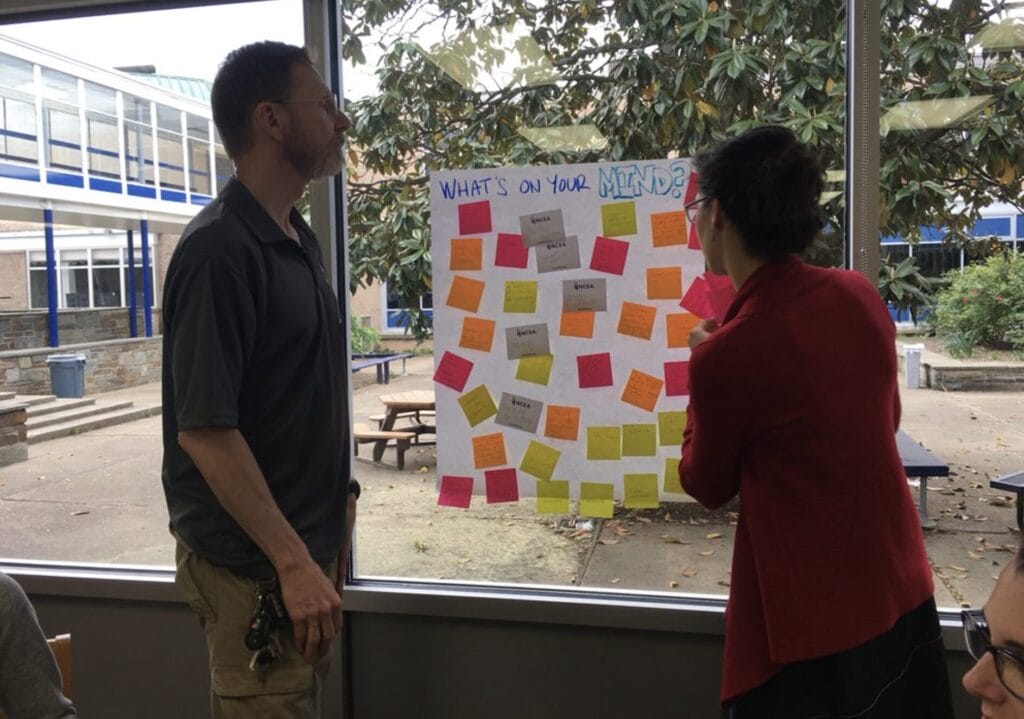
Design PD with multiple meaningful pathways and let teachers decide which route fits their students. Take a cue from the Edcamp model and give teachers the power to shape the PD offerings that best suit their needs. Keep the required elements small and the professional judgment large.

The Scarecrow — The Over-Coached Thinker
“Life’s more painless for the brainless.” — Fiyero
Who They Are
Scarecrow teachers often appear compliant. But that doesn’t mean they aren’t paying tons of attention. See those overstuffed binders they’re holding? They’ve got tons of ideas and loads of lesson plans they’ve been meaning to unpack. But over time, they’ve learned that sharing original thinking can feel risky.
Outer Want
The sneaky thing about Scarecrows (and we’ve all got a bit of Scarecrow in us) is that we’re always a sucker for new ideas, worksheets, presentation handouts, and activity templates. On the surface, they appear to provide a sense of clear answers that feel safe to use.
Inner Need
But when we dig a bit deeper into the Scarecrow mentality, they don’t need more “stuff” to pile into their desk drawers: they need permission to unpack what’s already in there, and an invitation (and protected time!) to just think. They aren’t lacking ideas. Many have strong instincts. They’ve simply been trained by PD culture to stuff, stuff, stuff without ever getting the time to sort it all out.
A Gift You Can Offer
Send them to learn, not to comply.
Invite Scarecrow teachers to attend an education conference, workshop, or unconference with a simple charge: go learn something that interests you, then come back and share what you’re thinking.
No lofty expectations for a fancy presentation. No need for a polished slide deck. Just something as simple as a brown bag lunch (or a cup of decent coffee on admin’s dime!) in the faculty lounge after school one day with the chance to share their story with any colleagues who might be interested in joining the fray to reflect on a single question: “What did you hear that made you think differently?”
Big, small, local, or virtual: conferences work for Scarecrow teachers because they flip the usual script. Instead of being told what to do, these teachers get to listen, question, compare ideas, and decide what matters to the very real (and very brainy!) work that they do. Sharing what they’ve learned with colleagues is a way to help those seeds take root back in their classrooms.
That’s often where their thinking comes back to life.
The Tin Man — The Guarded Veteran
“I cry a lot.” — Boq
Who They Are
Don’t let their hardened exteriors fool you. Tin Man teachers care deeply, even if it doesn’t always show. Years of shifting priorities and unfinished initiatives have taught them to conserve energy, and they’ve seen more than their fair share of new tech teaching gizmos and gadgets arrive with great fanfare only to join so many other discarded relics collecting all sorts of rust in the supply closets. What can look like disengagement is often self-protection.
Outer Want
For the Tin Man type, “Efficiency” is the name of the game. Every minute of a faculty meeting that tick, tick, ticks on by (like the beat of their mechanized heart), the Tin Mans are one step closer to tuning out altogether. Respect for their time and experience goes a very long way.
Inner Need
More than any of their peers, Tin Man teachers are prime candidates for reconnection. Not to slogans or trends, but to people and purpose. And we’re not just talking about “forced fun” or community building for its own sake. We need to feel an authentic connection to our place our schools.
A Gift You Can Offer
A chance to express authentic concerns in a Problem of Practice Protocol
I was first introduced to the Problem of Practice Protocol when I had the awesome privilege of serving on the Teacher Advisory Council for the Bill & Melinda Gates Foundation, and it has become a game-changer in the way that I think about PD and the work that we can do in affecting real change throughout a school community.
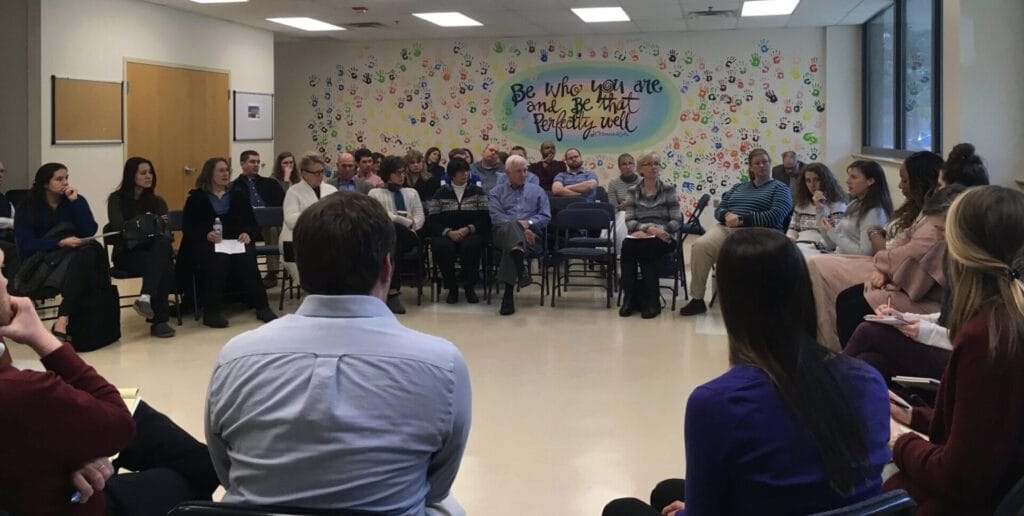
In a nutshell, the Problem of Practice Protocol gives a single teacher the chance to share an issue that’s been “grinding their gears” (sorry, Tin Men!), with the guided listening of an empathetic and interested support of colleagues to help them unpack the sticking point from all sorts of angles. Worried about AI? Problem of Practice Protocol to the rescue. Feeling overwhelmed by all these cell phones in the classrooms? Hello, Problem of Practice Protocol. The brilliance of the model is that it really can work for any topic that your teachers are experiencing, high-tech or low.
The secret to a great Problem of Practice Protocol? Keep it consistent. Anchor it to one shared instructional question. And let the person telling their story feel seen, heard, and supported by the folks who are likely experiencing something much the same just a few classrooms down the hall. This is often where guarded teachers re-engage.
The Cowardly Lion — The Quiet Innovator
“One of the benefits of caging a lion cub this young is that he will never, in fact, learn how to speak.”
Who They Are
Big hearts, big brains, and big personalities: the so-called “Cowardly” Lion teachers are anything but scared when you really look closely. These teachers are often roaring with ideas in their classrooms, but they tend to experiment quietly for fear of making to much of a commotion in front of the larger faculty. And this behavior is likely a reflection of a broader school culture issue: whether these teachers are starry-eyed newbies or battle-tested vets, they often hesitate to speak publicly before their peers because visibility has consequences. They’ve seen what happens when a risk doesn’t land.
(We’ve all been in that one department meeting, am I right? Oh the stories I could tell you!)
Outer Want
These Lions are waiting to take their rightful place as building leaders among their peers. But first, they’ll need reassurance. And to do that, it’s up to a savvy PD facilitator to provide them a signal that it’s safe to speak.
Inner Need
The fix for “Cowardly” Lions comes in the form of psychological safety. We’re talking Maslow 101, here, folks. Innovation rarely fails because of a lack of courage. It stalls in environments where mistakes are remembered longer than growth.
A Gift You Can Offer
Make participation visible and fair.
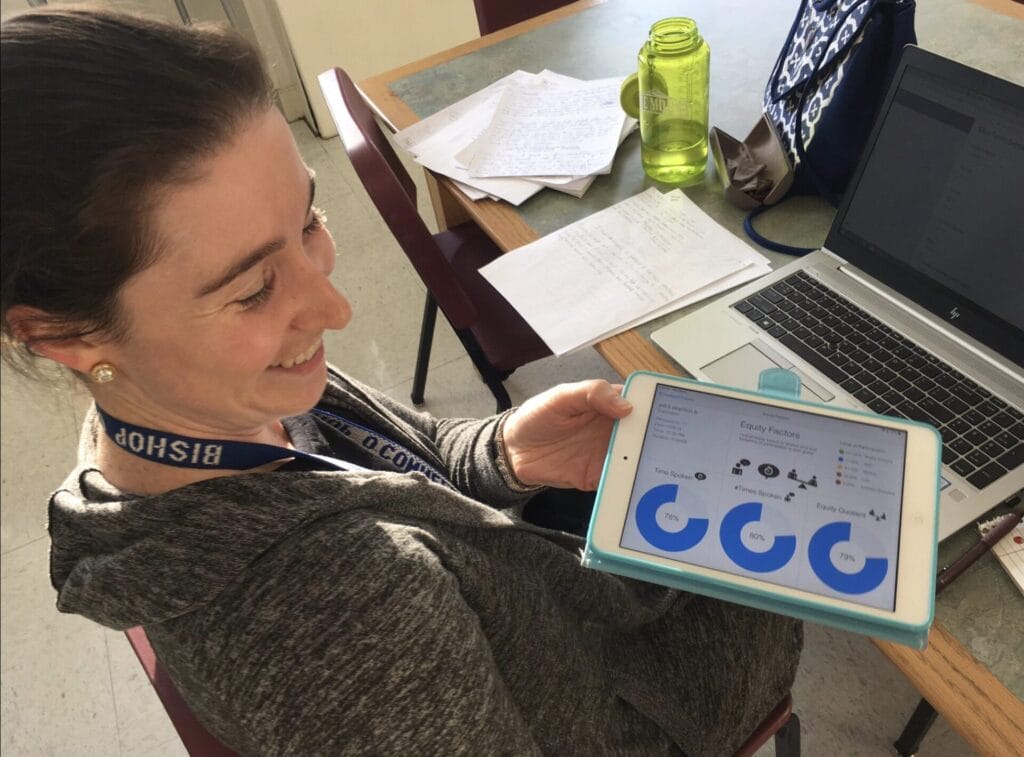
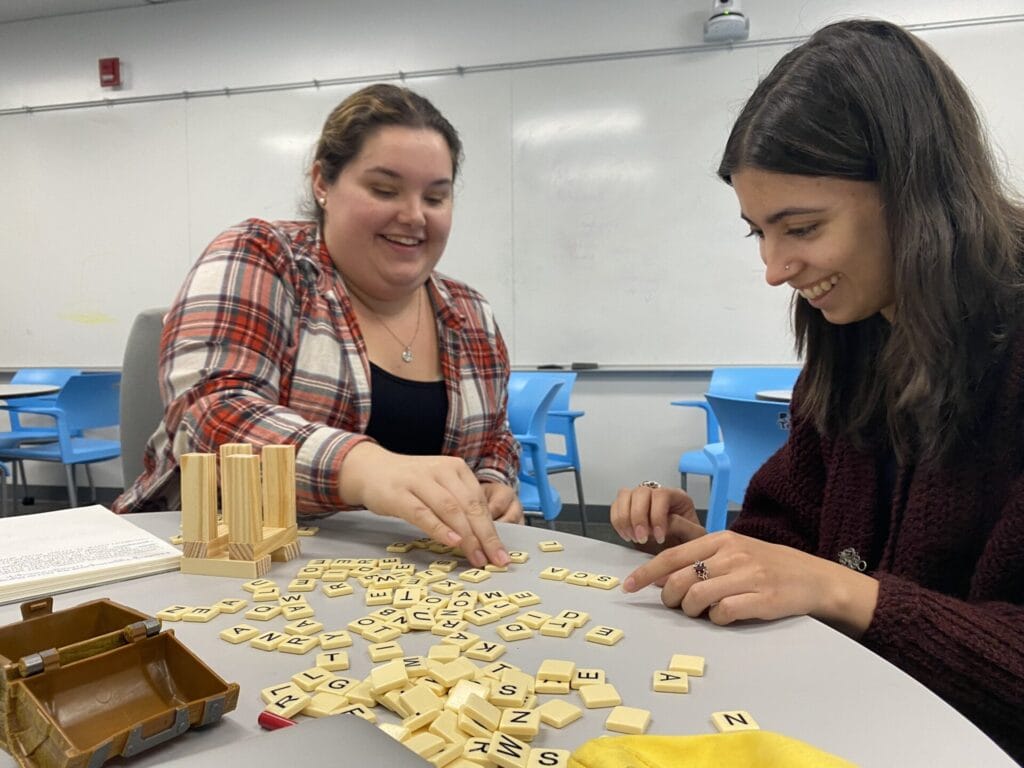
One of my all time favorite ways to put a team’s ability to support and share the voices of all parties involved is through the use of tools like Equity Maps during PD or meetings. Think of it like a Fitbit for your Socratic Seminar. With a single iPad app download, you’ll have the power to surface whose voices dominate the conversation and whose are missing. Share the data without judgment. Set one small goal together for next time.
Glinda — The Polished Performer
“It’s good to see me, isn’t it?”
Who They Are
Popular. It’s all about Popular. And make no mistake, Glinda teachers are admired for good reason. Their classrooms are Pinterest-perfect. Their Teachers Pay Teachers–esque instructional materials look finished down to the last piece of carefully chosen clipart. They might even be the kind of teacher who never repeats an outfit in a single school year (you laugh, but I’ve worked with at least one colleague who proudly claimed this as her thing).
Unsurprisingly, these so-called “Good Witches” of instruction are often held up as examples of good teaching.
But don’t be fooled by the flawless presentation. Maintaining that image takes a ton of work.
Outer Want
The Good Witch is only as “good” as her fellow citizens say she is. For these teachers, approval is the name of the game. Recognition—especially public recognition—that confirms they’re doing it right helps keep the magic alive.
Inner Need
This one sounds counterintuitive, but if Wicked’s Glinda teaches us anything, it’s that these teachers need permission to be unfinished sometimes. When everything has to look perfect, experimentation becomes risky. The performance becomes the job. And eventually, that proverbial bubble is bound to pop.
A Gift You Can Offer
Normalize drafts and works in progress.
Create space for half-built lessons and honest questions. Celebrate process, not just polish.
One of the most powerful versions of this I’ve seen came from a principal I worked with while serving as an instructional coach. Each week, his faculty newsletter highlighted experimental teaching, works in progress, and small moments of insight from classrooms across the building. Not perfection or finished products. Just real teaching in motion.
That kind of recognition changes what feels safe to share.
Elphaba — The Misunderstood Innovator
“I’m through with playing by the rules of someone else’s game.”
Who They Are
Elphaba teachers don’t fit the mold. They question routines. They try unfamiliar approaches. Their classrooms may not resemble the examples in PD decks, but meaningful learning is often happening there. And chances are? If you’ve found your way here to EMC² Learning, there’s probably a whole lot of Elphaba to the way that you approach the whole teaching game.
Outer Want
Real talk? Elphaba is longing for Legitimacy. If she has even the haziest vision of “a celebration throughout all of Oz that’s all to do” with her, it’s because she’s dying to be taken seriously rather than dismissed as difficult.
Inner Need
With apologies to the time-honored traditions of the Grimmerie, Dear Old Shiz, and the Wonderful Wizard of Oz: for Elphaba types, the system simply needs a broader lens for excellence. Elphaba doesn’t need fixing. The system needs better eyesight. Innovation doesn’t always look tidy at first, and some of the most powerful work starts outside the norm.
A Gift You Can Offer
A professional home that protects experimentation.
Call us wicked if you must, but this is where a membership like EMC² Learning can be a strong fit.
For teachers who don’t want scripts, but do want support, EMC² offers a space to pilot ideas, remix strategies, and learn alongside others who value thoughtful risk-taking. There’s no pressure to scale everything immediately, and zero demand to conform to a single “right way.” Just practical tools, shared language, and a community that understands that real innovation takes time.
In other words, it’s a protected pilot lane to curate, tinker and fly, my pretties.
Pulling Back the Curtain
In Wicked, the Wizard’s reveal isn’t about humiliation. It matters because it frees everyone else. Once the illusion falls away, the travelers realize they were never empty. They were just looking in the wrong place.
Teacher PD improves when it stops chasing spectacle and starts supporting practice. That means more transparency, more time, and fewer one-size-fits-all solutions.
Done well, it can change your teacher PD, for good.
The activities featured in EMC² Learning presentations and workshops are just a handful of the 1,100+ resources available and on their way to arrive shortly in the EMC² Learning library. This entire library is available to all members with an active Engagement Engineer or Engagement Engineer PLUS account, and is included with your annual site membership. We hope you’ll consider joining us as an Engagement Engineer to unlock a full year of site access. For complete details including our exclusive limited time offer for annual site membership, click here.